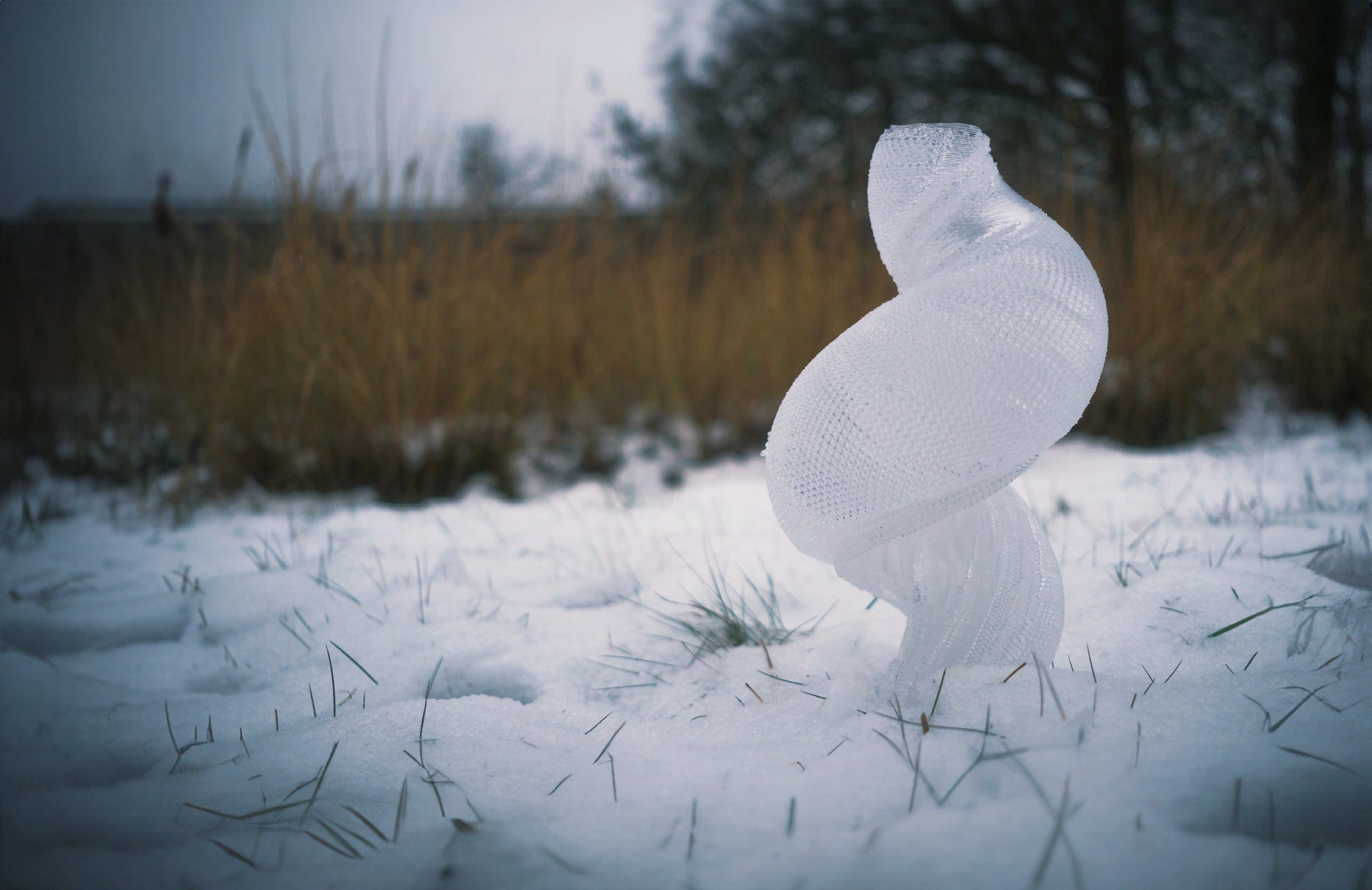
 Image unavailable. The source caption, original image link and project text remain available.
A physical prototype from the dot-based non-planar printing study.
Group1 project: Chia-Hsuan Chao / Namdev Talluru / JunJie.Open full image (new tab)Printing Architecture · Dot-based non-planar fabrication
I explored printing parameters and toolpath delays with Group1 to develop dotted surfaces across different geometries.
Follow the study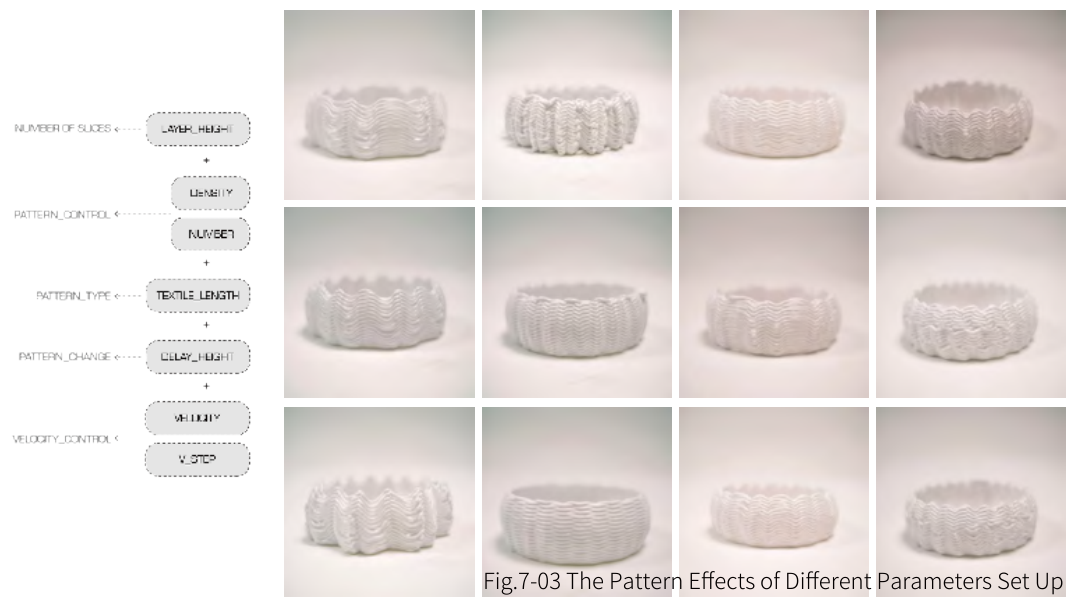
Layer height, density, pattern and speed are explored through a family of printed samples.
Group1 project: Chia-Hsuan Chao / Namdev Talluru / JunJie.
Parameters become material patterns.
I explored layer height, density, speed and pattern settings through printed samples with Group1. The surfaces reveal how those choices change bead spacing and texture.
We then carried the dotted surface language from small samples into curved and twisted geometries.
Original source view.
Recorded low-speed dot-path sample positions from Group 1. This point study describes the path rather than a finished solid.
Scroll to follow the camera. With focus, use arrow keys to inspect; Home or Esc returns to the current scroll view.
A physical prototype from the dot-based non-planar printing study.
Group1 project: Chia-Hsuan Chao / Namdev Talluru / JunJie.
Read the path through the deposited beads.
I worked on robotic paths and deposition delays with Group1. The original plate compares three path strategies alongside printed rings and close views of the deposited beads: read each row from movement diagram to material pattern.
The point model shows recorded low-speed path sample positions, not a finished solid or a complete fabrication sequence. The separate form study pairs printed shapes with line models to explore the strategy across different geometries.
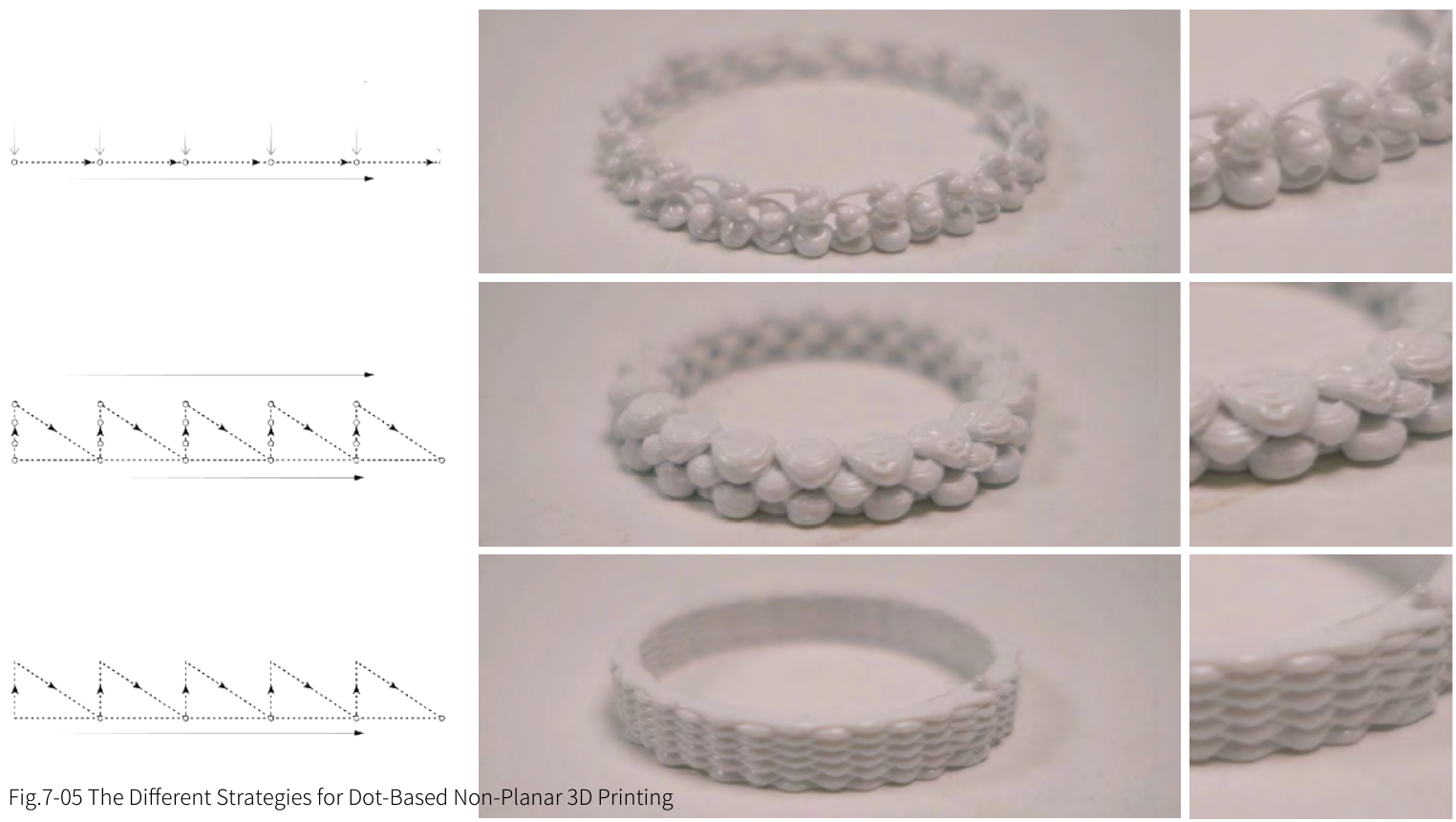
Different deposition paths and time-delay strategies produce different bead patterns.
Group1 project: Chia-Hsuan Chao / Namdev Talluru / JunJie.Open full image (new tab)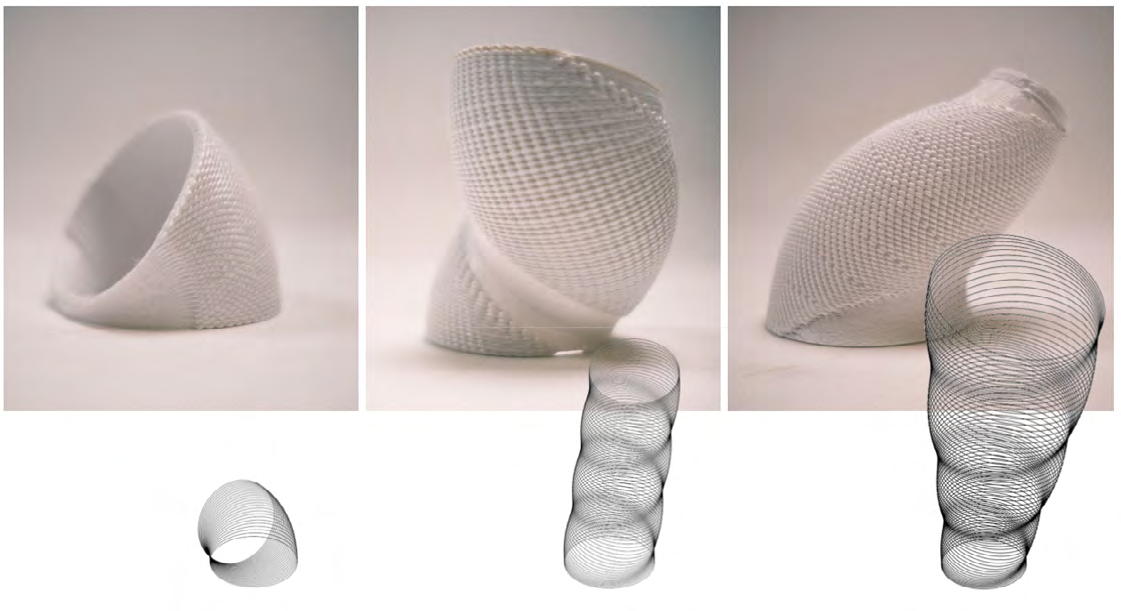
The printing strategy is explored across a sequence of different overall forms.
Group1 project: Chia-Hsuan Chao / Namdev Talluru / JunJie.Open full image (new tab)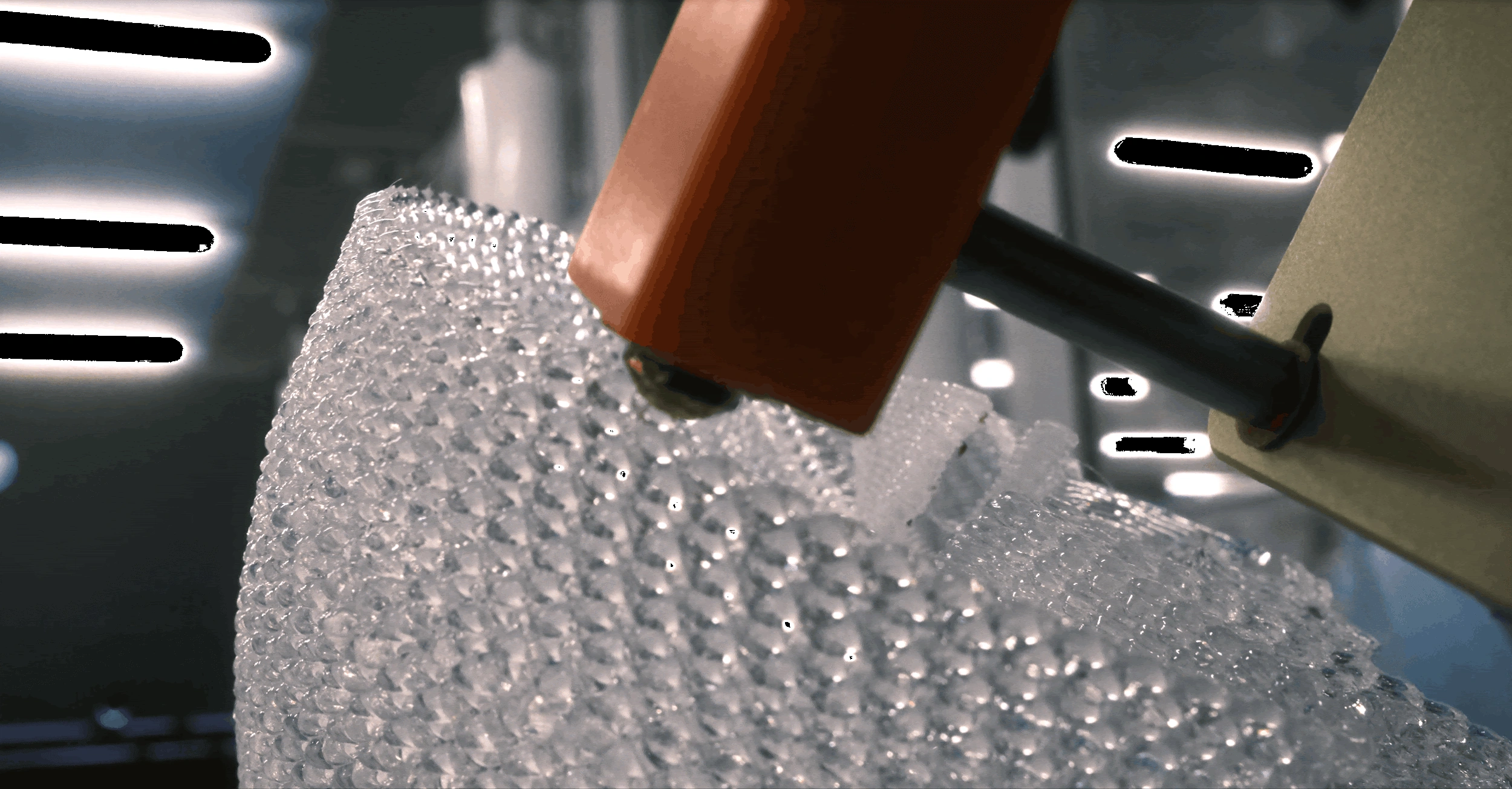
Original Group1 recording of nozzle deposition during the printing study.
Group1 project: Chia-Hsuan Chao / Namdev Talluru / JunJie.
Watch the pattern being deposited.
The original fabrication recording shows a nozzle depositing material along the specimen edge. It makes the relationship between movement, extrusion and the dotted pattern visible in a physical trial.
This recording, the sampled point path and the comparison plates are different kinds of evidence from our printing study; they are not presented as one continuous recorded operation.
A family of physical experiments.
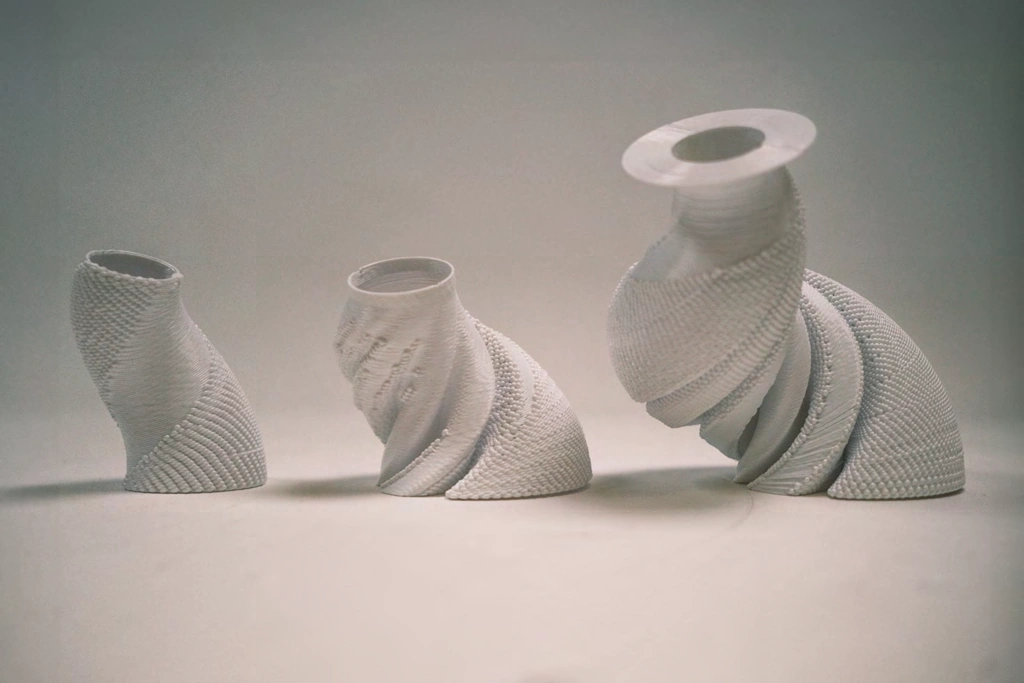 Image unavailable. The source caption, original image link and project text remain available.
The physical geometry-development prototypes.
Group1 project: Chia-Hsuan Chao / Namdev Talluru / JunJie.Open full image (new tab)The physical prototypes carry the dotted surface study into different twists and overall shapes. They show a family of material experiments rather than a ranked set of optimal printing settings.
A translucent TPU prototype family extends the study into a lit display, where light reveals the bead structure and variation between surfaces.
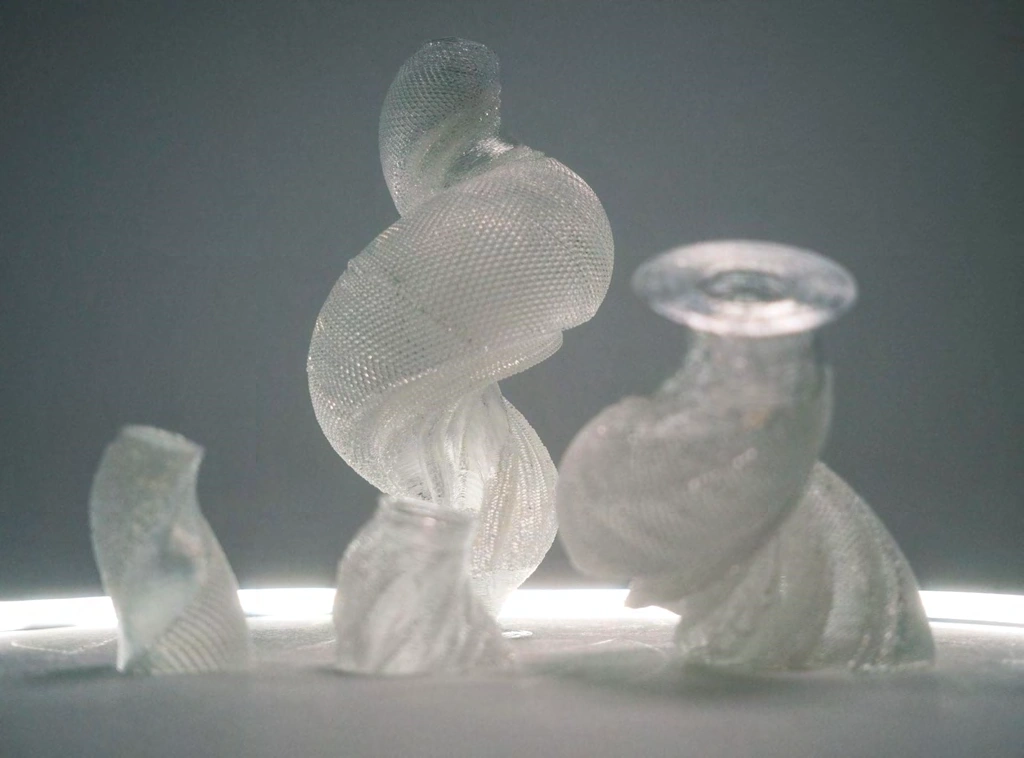 Image unavailable. The source caption, original image link and project text remain available.
The translucent TPU prototype family in a lit display.
Group1 project: Chia-Hsuan Chao / Namdev Talluru / JunJie.Open full image (new tab)