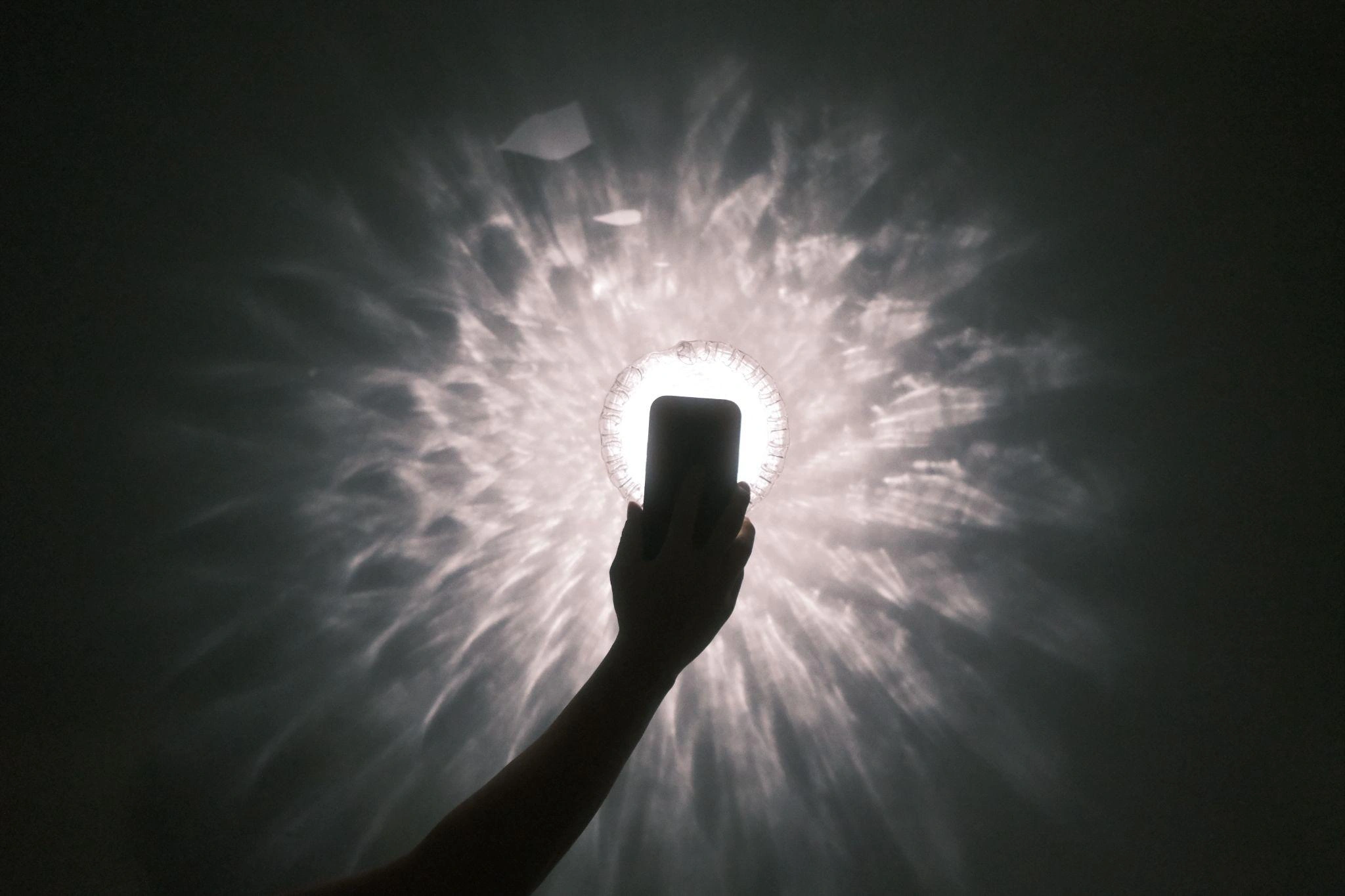
 Image unavailable. The source caption, original image link and project text remain available.
A photographed caustic pattern from the Group-Red experiments, not a measured optical-performance result.
Group-Red: Paul Jaeggi / Behnur Baiju / Kevin Seav / JosHsuan Chao.Open full image (new tab)Inflation-based Pattern Exploration
With Group-Red, I explored how computational printing paths and inflated shells could produce different light patterns, moving between digital path studies and physical samples.
Follow the study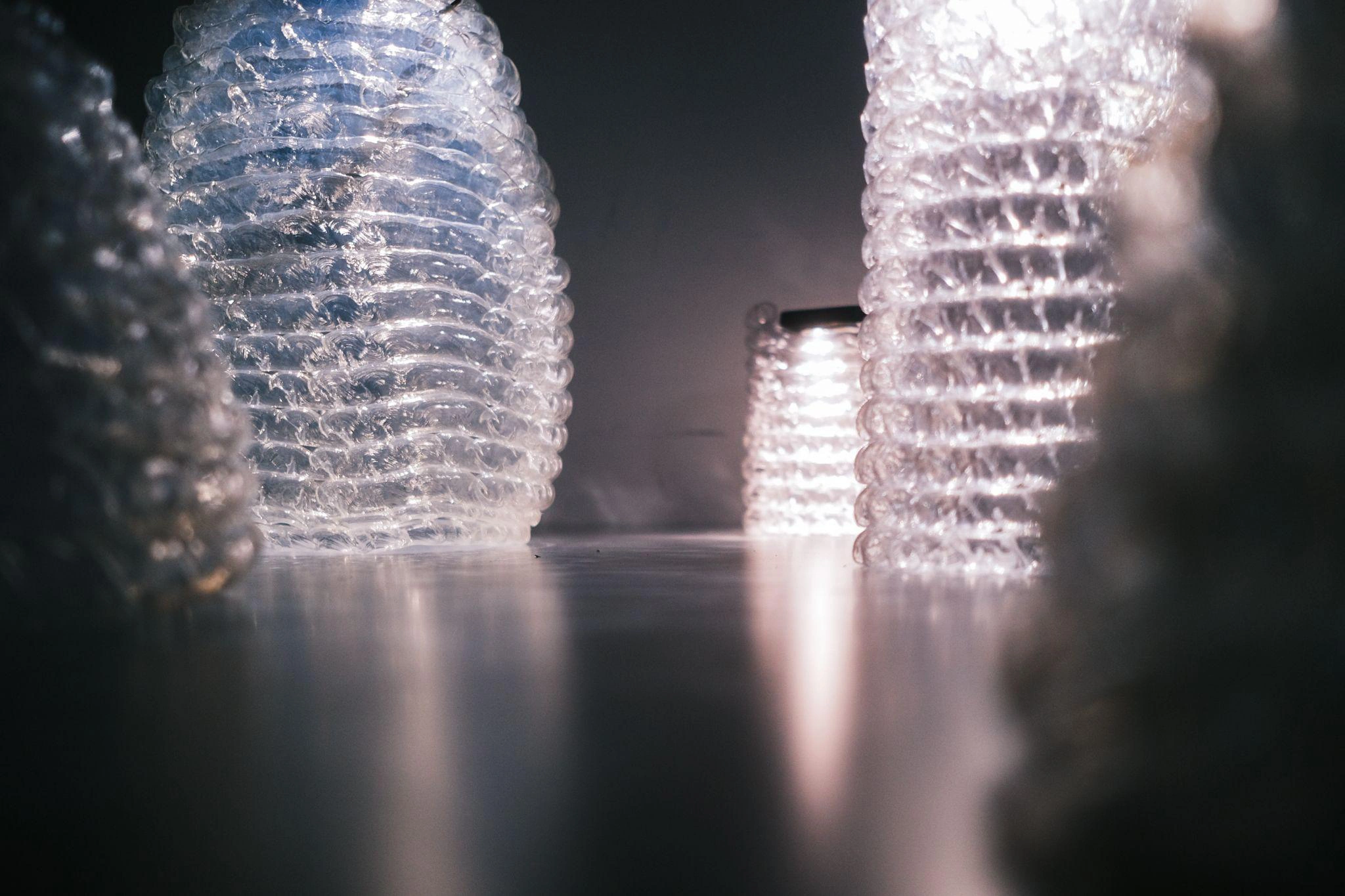
Original source view.
Original patterned lamp-shade model from the lighting study. The photographed light patterns remain the project evidence.
Scroll to follow the camera. With focus, use arrow keys to inspect; Home or Esc returns to the current scroll view.
Physical shells from the Group-Red inflation and caustics study.
Group-Red: Paul Jaeggi / Behnur Baiju / Kevin Seav / JosHsuan Chao.
Begin with the shell and its layers.
I explored caustic patterns through simple shell geometries with Group-Red, drawing on Greek meander motifs and the Hilbert curve. The opening photograph shows a physical light experiment; the model introduces the patterned shell geometry.
The layer study below separates the bottom, middle and top point rows. Changes within each layer and planar layer addition provided the starting structure for the printing-path study.
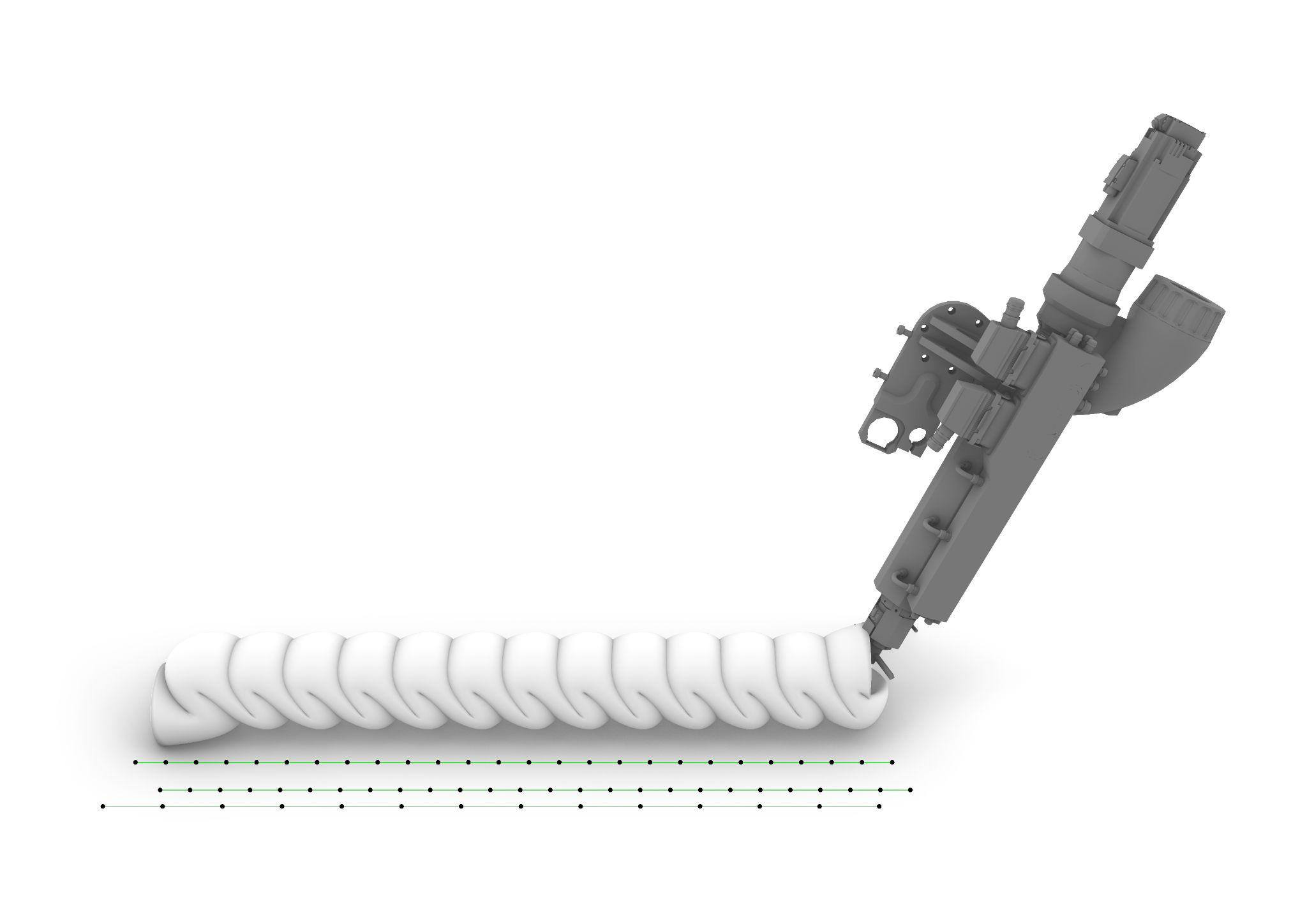
The original layer-slicing and curve-division diagram.
Group-Red: Paul Jaeggi / Behnur Baiju / Kevin Seav / JosHsuan Chao.Open full image (new tab)Original source view.
Original patterned lamp-shade model from the lighting study. The photographed light patterns remain the project evidence.
Scroll to follow the camera. With focus, use arrow keys to inspect; Home or Esc returns to the current scroll view.
Physical shells from the Group-Red inflation and caustics study.
Group-Red: Paul Jaeggi / Behnur Baiju / Kevin Seav / JosHsuan Chao.
Connect the points, then orient the tool.
I worked on the computational path study as part of the team. Connections between the bottom, middle and top point rows define the path in the first diagram below.
The second diagram adds tilted coordinate frames along that path. Read these as two parts of the computational workflow: where the tool travels, then how its orientation is arranged.
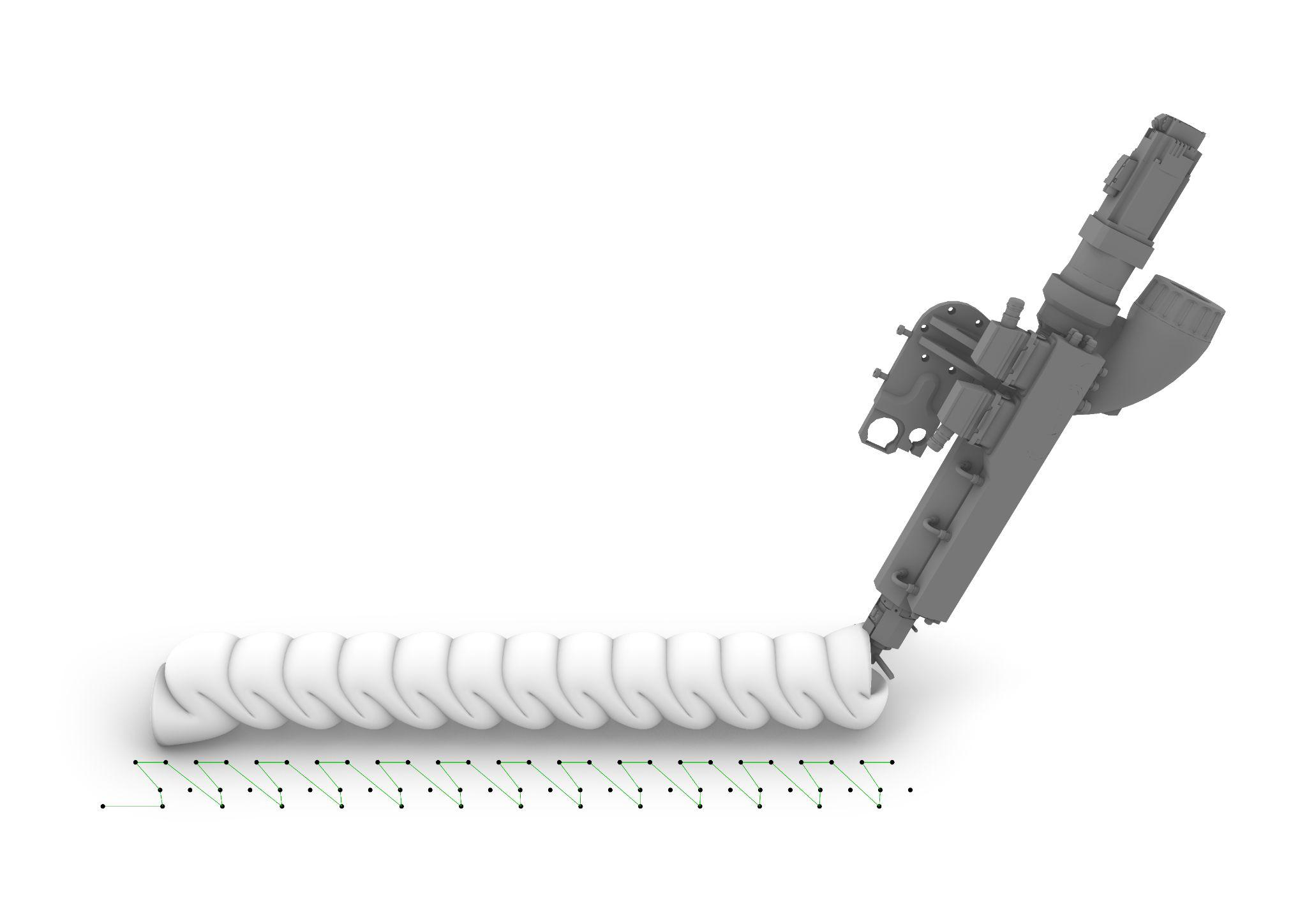
The original diagram of connections between bottom, middle and top point rows.
Group-Red: Paul Jaeggi / Behnur Baiju / Kevin Seav / JosHsuan Chao.Open full image (new tab)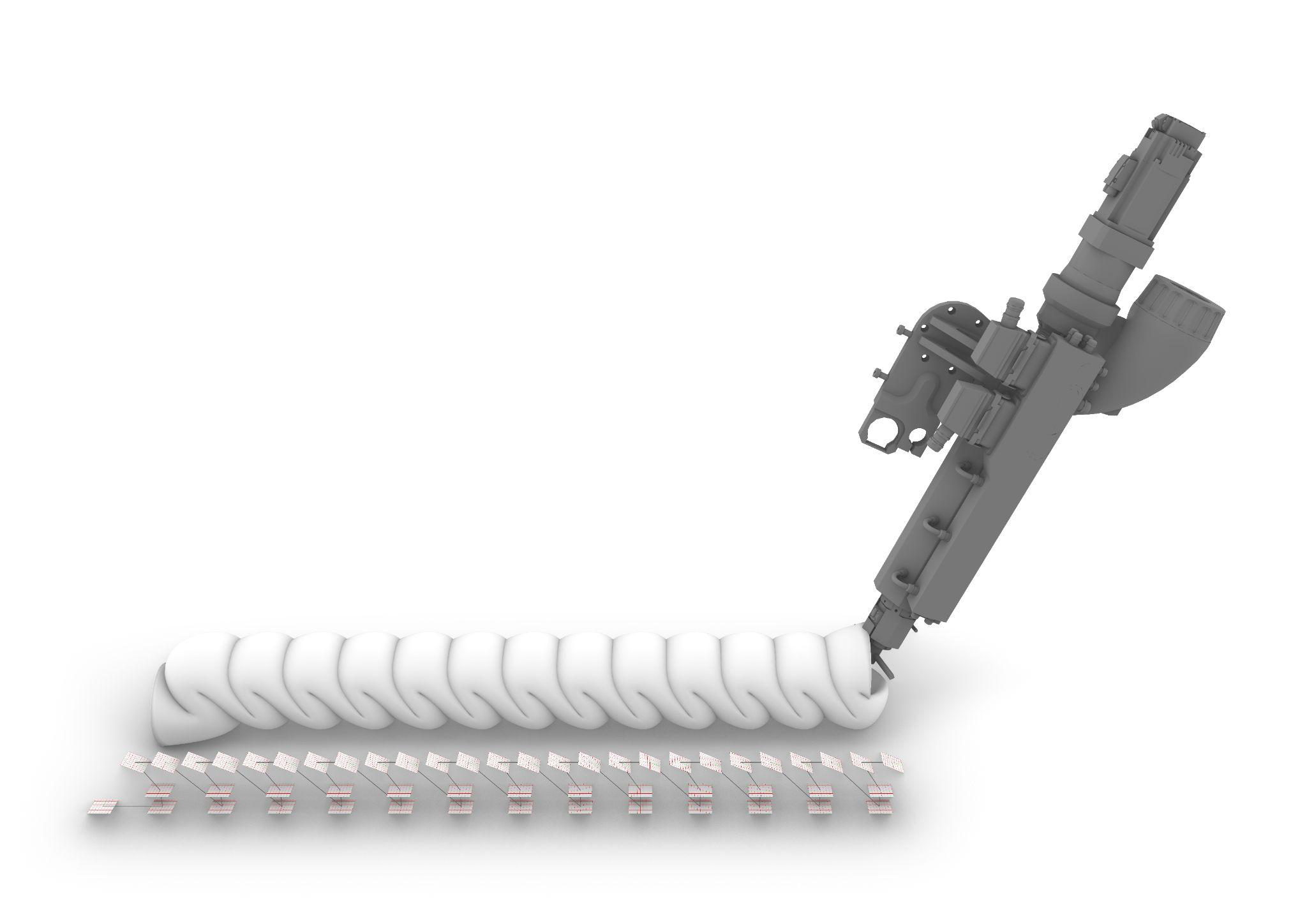
The original frame-arrangement diagram.
Group-Red: Paul Jaeggi / Behnur Baiju / Kevin Seav / JosHsuan Chao.Open full image (new tab)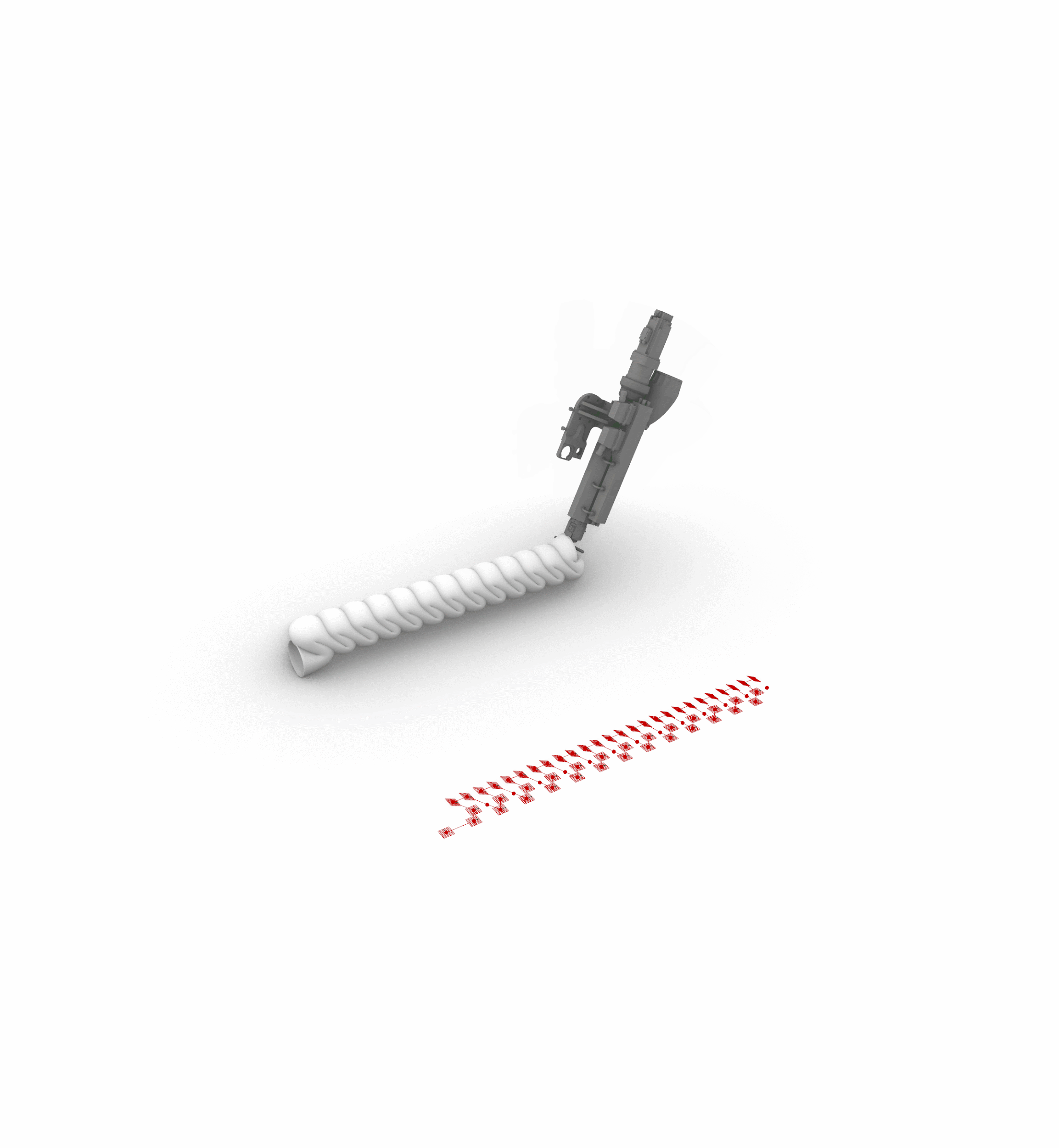
Robotic printing-path simulation developed for the Group-Red study.
Group-Red: Paul Jaeggi / Behnur Baiju / Kevin Seav / JosHsuan Chao.
Bring the path and tool together.
The original fabrication-path animation brings the tool, shell geometry and path frames together as a simulation of the printing strategy. It is not a recording of physical fabrication or a simulation of the resulting light pattern.
Our physical experiments were sensitive to air pressure and cooling. The digital path was therefore one part of the investigation, not a substitute for material trials.
Read the samples and their limits.
Image unavailable. The source caption, original image link and project text remain available.Physical shells from the Group-Red inflation and caustics study.
Group-Red: Paul Jaeggi / Behnur Baiju / Kevin Seav / JosHsuan Chao.Open full image (new tab)The physical shells connect the path study back to the light experiment shown at the beginning. The photographs document observed forms and light patterns; they do not establish a quantified relation between a particular toolpath and optical performance.
Sticking and overinflation were also part of the investigation. The orange samples below show material departing from the intended shell geometry, keeping the process limitations alongside its visual results.
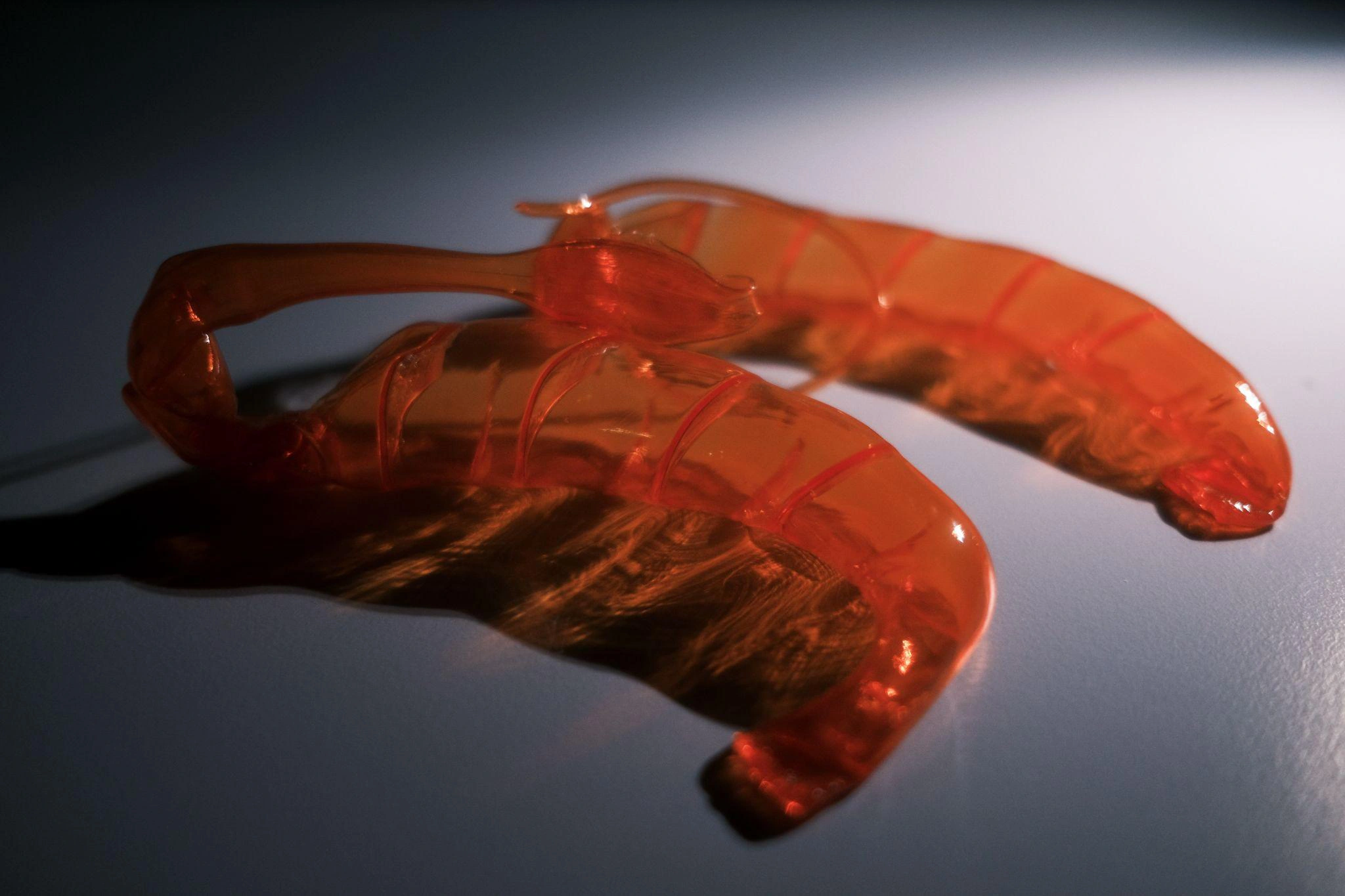 Image unavailable. The source caption, original image link and project text remain available.
Overinflation deforms the curved shell samples.
Group-Red: Paul Jaeggi / Behnur Baiju / Kevin Seav / JosHsuan Chao.Open full image (new tab)