Project Caschlatsch
Timber fabrication and AR assembly
I worked on computational design and XR production tools within the collective timber-tower project, connecting beam aggregation, digital fabrication and assembly.
Follow the studyA collective timber tower.
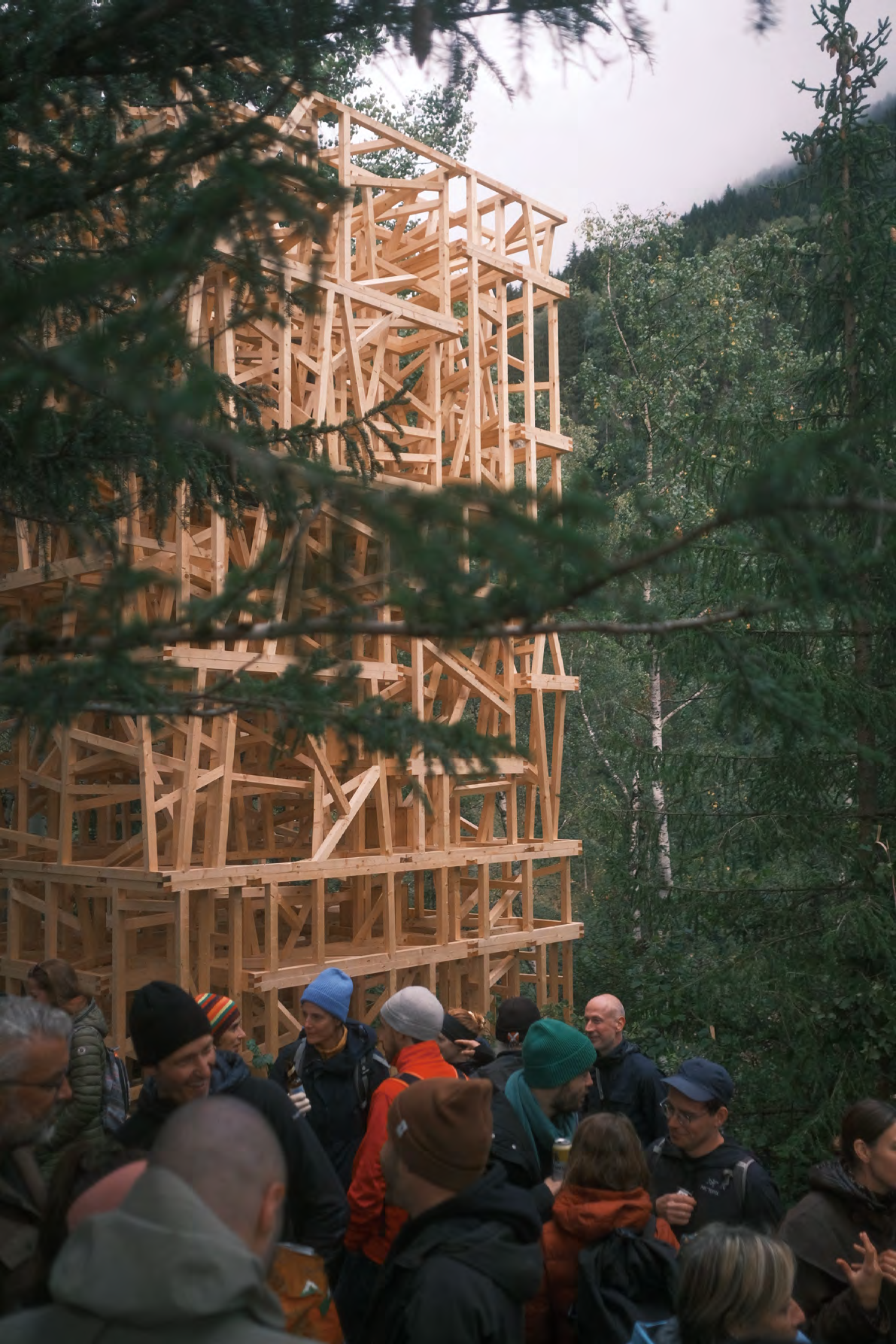 Image unavailable. The source caption, original image link and project text remain available.
The constructed timber tower on site.
Source publication: Chia-Hsuan Chao / ETH MAS DFab 2023–24.Open full image (new tab)Project Caschlatsch brought the MAS DFab cohort together around a modular timber structure, connecting computational design, fabrication and assembly. The project developed at ETH Zurich and became a built installation at Disentis/Mustér.
We worked across a shared digital model, prefabricated timber modules and collaborative assembly. Within this collective project, my work connected computational design with the XR tools used during production.
Connect indexed cells to timber modules.
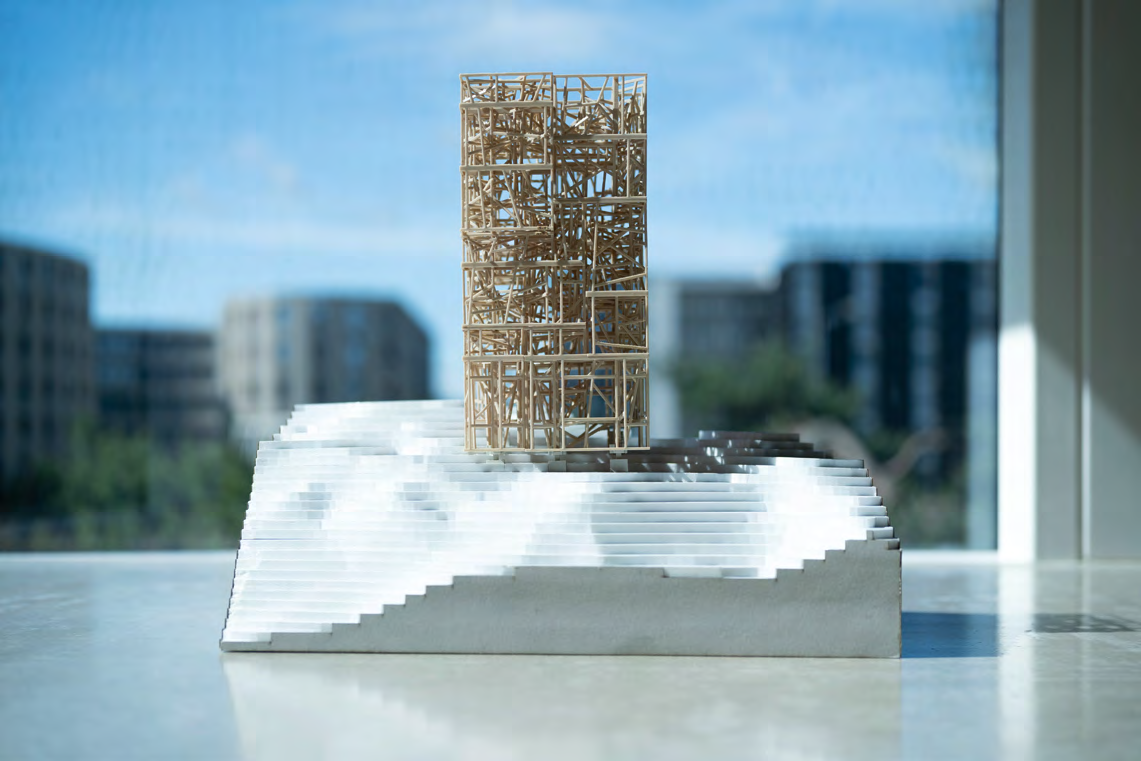 Image unavailable. The source caption, original image link and project text remain available.
The architectural timber-tower model.
Source publication: Chia-Hsuan Chao / ETH MAS DFab 2023–24.Open full image (new tab)I worked on the cohort’s voxel-to-beam aggregation in Python and Grasshopper. The five-class framework separates processing from geometry: ID manages indexing and neighbours, Discrete Vector Generator supplies directions, Voxel represents spatial cells, Beam the timber elements, and Layer groups of voxels.
A 26-direction discretisation defines candidate beam axes through voxel centres. Stored voxel data tracks existing beams to control intersections and avoid redundant crossings. The module plate then shows the material arrangement: an edge frame, orthogonal and diagonal supports, and five-beam or 30-beam infill.
My code work separated the aggregation solver and ID/vector tools for Grasshopper and refined occupied-voxel checks for the flying-beam problem. This was part of the shared research linking aggregation, module planning and fabrication; the original framework and infill plates below retain the detailed labels.
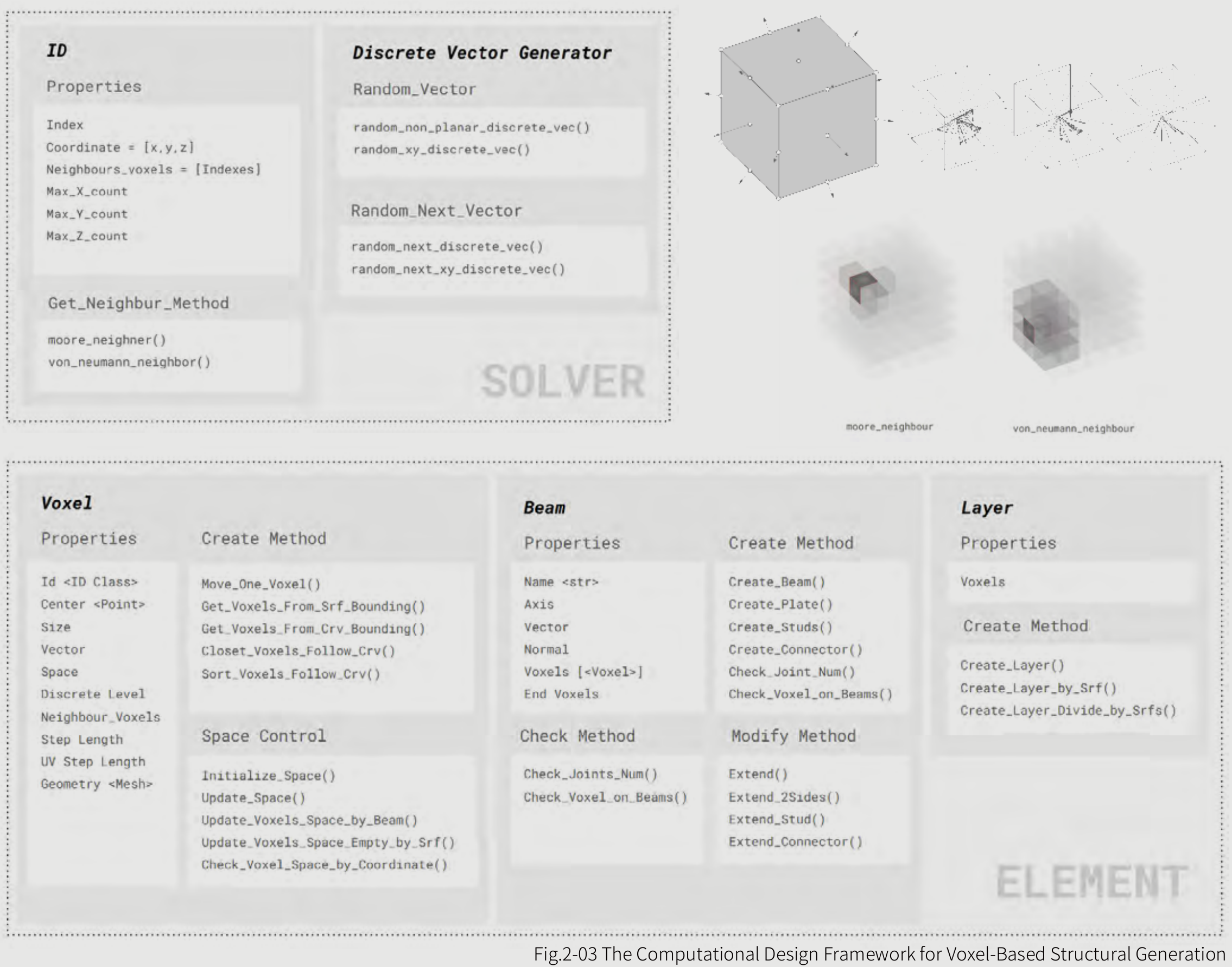 Image unavailable. The source caption, original image link and project text remain available.
The original five-class framework for voxel-based structural generation.
Source publication: Chia-Hsuan Chao / ETH MAS DFab 2023–24.Open full image (new tab)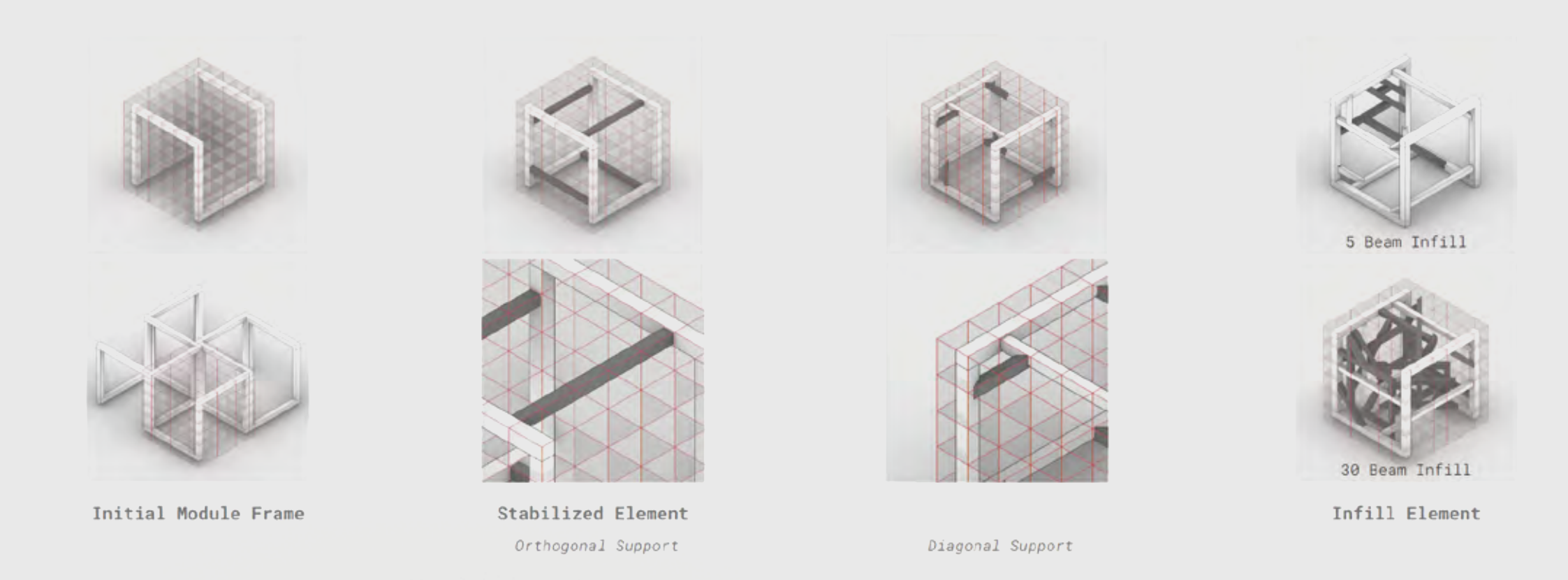 Image unavailable. The source caption, original image link and project text remain available.
Module-frame, orthogonal/diagonal support and 5-/30-beam infill strategies (upper schematic detail).
Source publication: Chia-Hsuan Chao / ETH MAS DFab 2023–24.Open full image (new tab)Choose a module, then locate its beam.
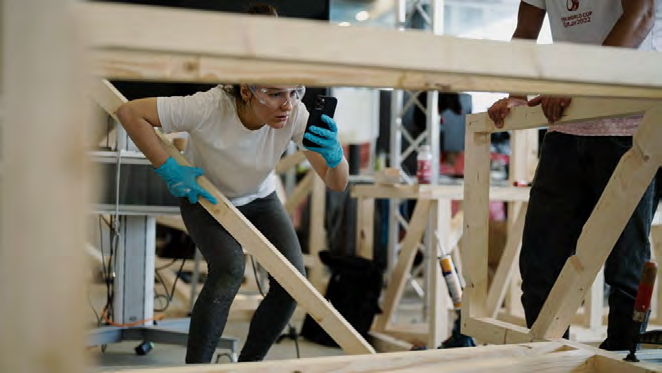 Image unavailable. The source caption, original image link and project text remain available.
XR-guided timber assembly in the collaborative workshop.
Source publication: Chia-Hsuan Chao / ETH MAS DFab 2023–24.Open full image (new tab)During production, I improved COMPAS XR so users could select and switch modules from a cloud server, track beam IDs and follow the assembly sequence in real time. The original assembly plate follows these tasks through module selection, floating and orientation, module positioning and beam selection.
The annotated interfaces distinguish assembly and stacking tasks. Orientation arrows and a floating-beam view support component and cutting-feature inspection; scaling, three-axis rotation and stacking/assembly modes support module inspection and positioning.
Behind these tasks, a COMPAS Timber assembly plan supplies JSON building plans and checklists, with OBJ mesh geometry exchanged through Firebase to the AR applications. I also prepared Rhino-to-COMPAS data, converted stacking planes into frames and prepared module building-plan and mesh exports. My interface contributions sat within this collaborative CAD, cloud and XR system.
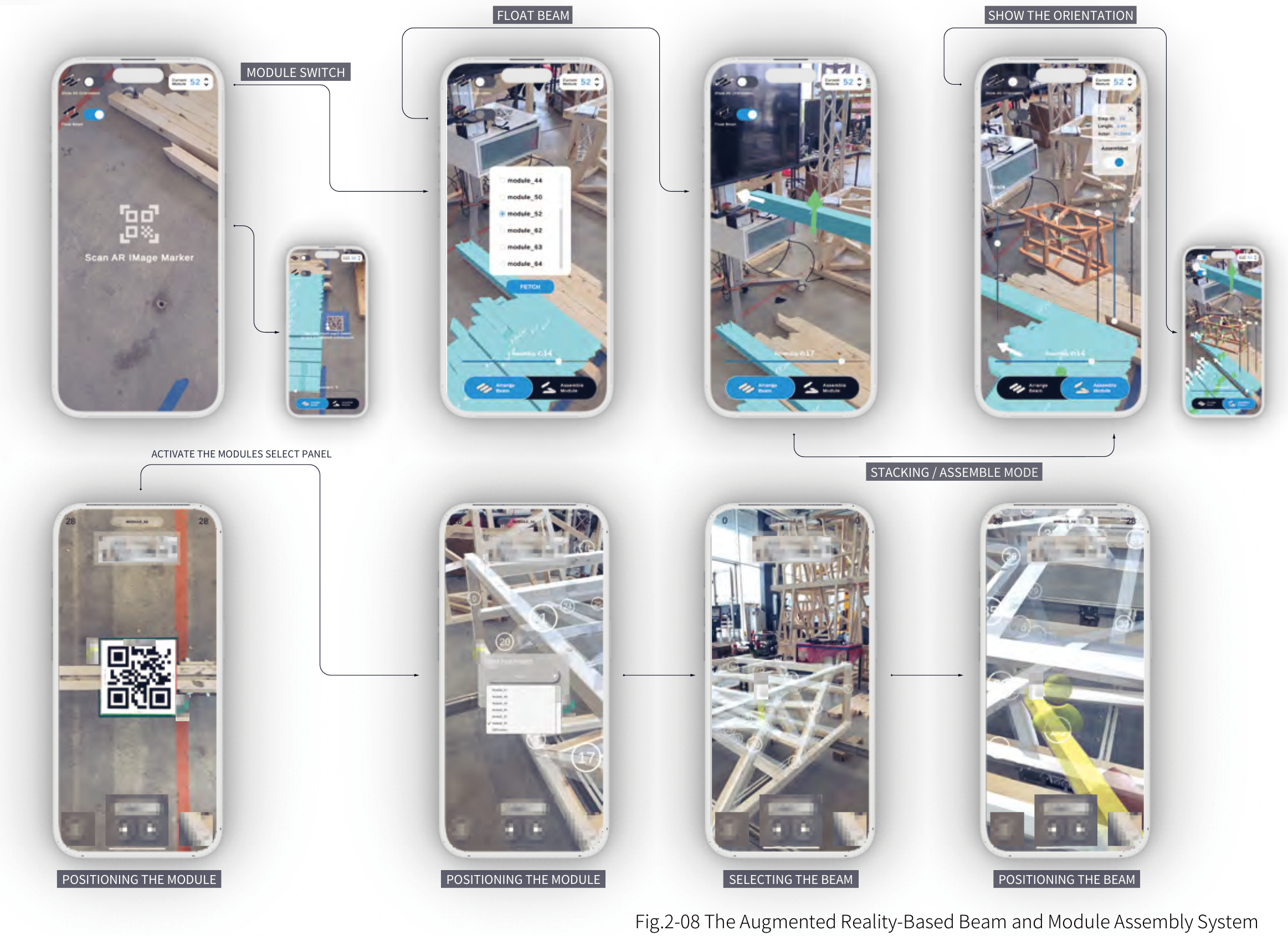 Image unavailable. The source caption, original image link and project text remain available.
The original AR-based beam and module assembly sequence.
Source publication: Chia-Hsuan Chao / ETH MAS DFab 2023–24.Open full image (new tab)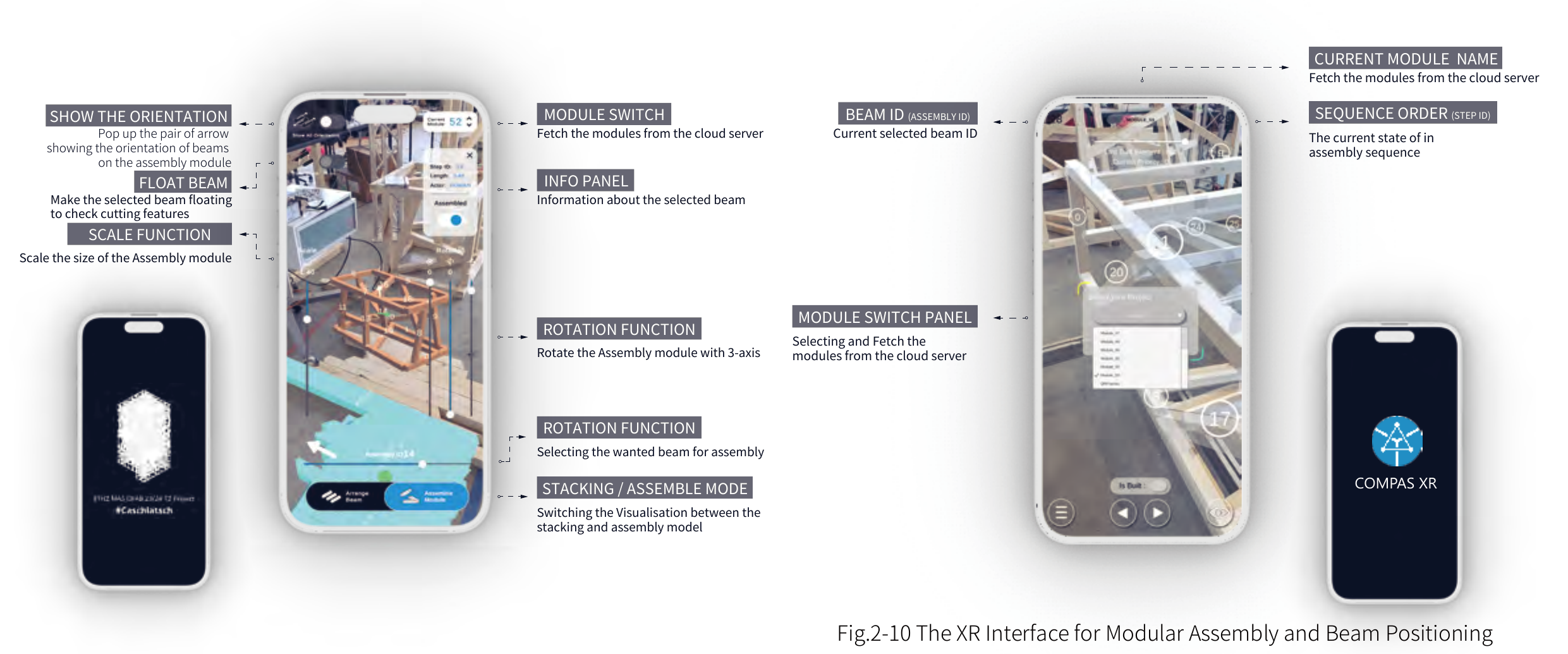 Image unavailable. The source caption, original image link and project text remain available.
The original XR interfaces for modular assembly and beam positioning.
Source publication: Chia-Hsuan Chao / ETH MAS DFab 2023–24.Open full image (new tab)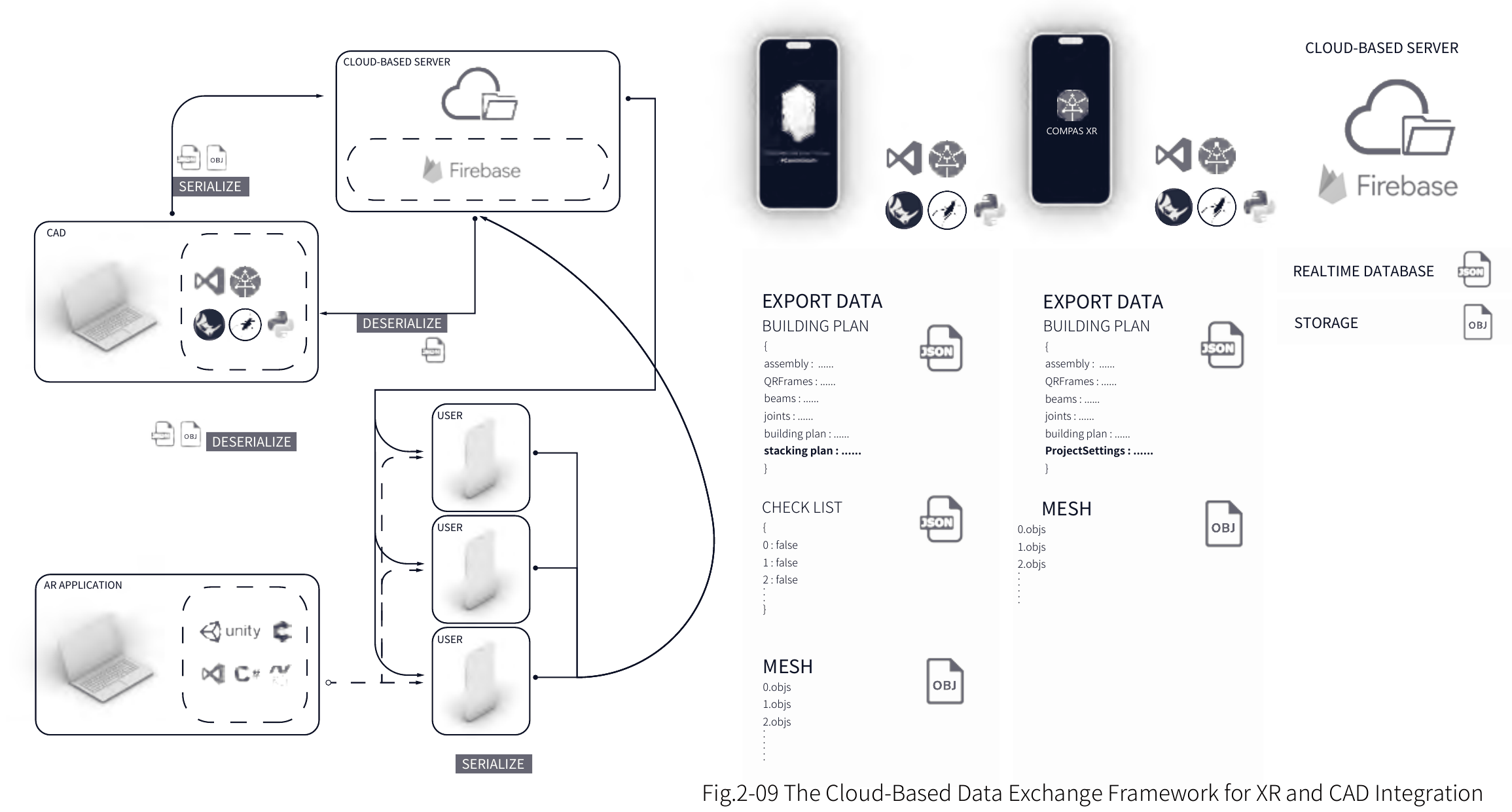 Image unavailable. The source caption, original image link and project text remain available.
The original cloud data-exchange framework for XR and CAD.
Source publication: Chia-Hsuan Chao / ETH MAS DFab 2023–24.Open full image (new tab)One model, many hands.
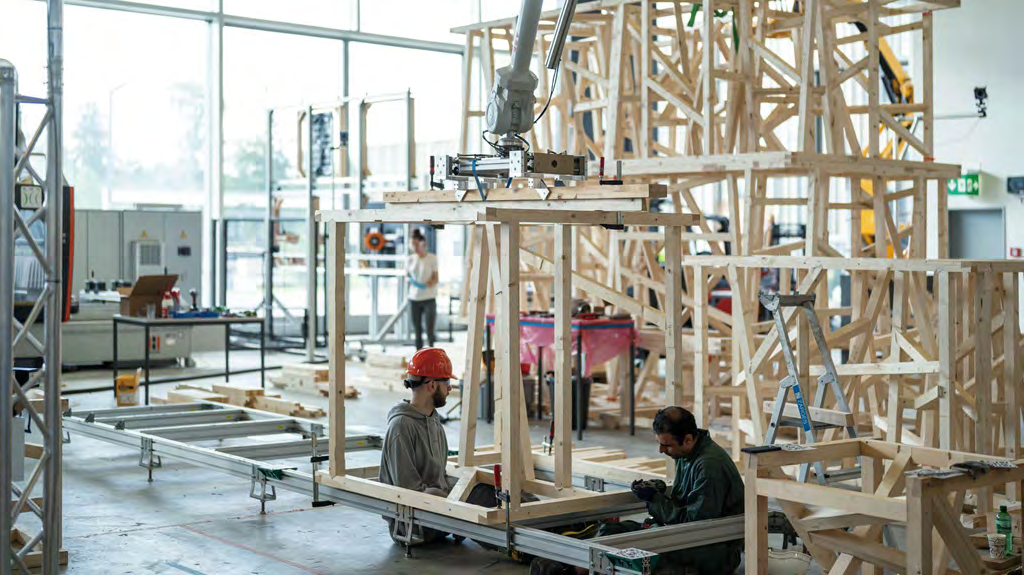 Image unavailable. The source caption, original image link and project text remain available.
Robot-assisted timber module assembly.
Source publication: Chia-Hsuan Chao / ETH MAS DFab 2023–24.Open full image (new tab)The digital model connected beam geometry with fabrication and module assembly. Robotic and CNC processes prepared timber elements, while students worked together to assemble the modules.
The workshop brought digital planning into contact with physical handling and coordination. XR guidance was one part of that shared making process, alongside the people, tools and prefabricated components.
XR-guided timber assembly in the collaborative workshop.
Source publication: Chia-Hsuan Chao / ETH MAS DFab 2023–24.Open full image (new tab)From modules to a place.
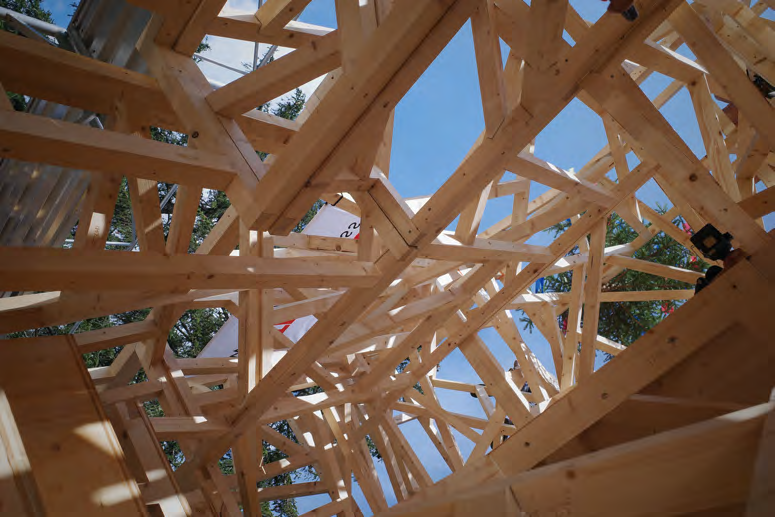 Image unavailable. The source caption, original image link and project text remain available.
Inside the constructed timber tower.
Source publication: Chia-Hsuan Chao / ETH MAS DFab 2023–24.Open full image (new tab)The assembled modules create a route through the timber interior, with steps rising toward a lookout. Repeated beams form both the structure and the experience of moving through it.
The completed installation is a cohort and partner achievement. It brings computational aggregation, digital fabrication and collaborative assembly together in a place that can be entered and used.