 Image unavailable. The source caption, original image link and project text remain available.
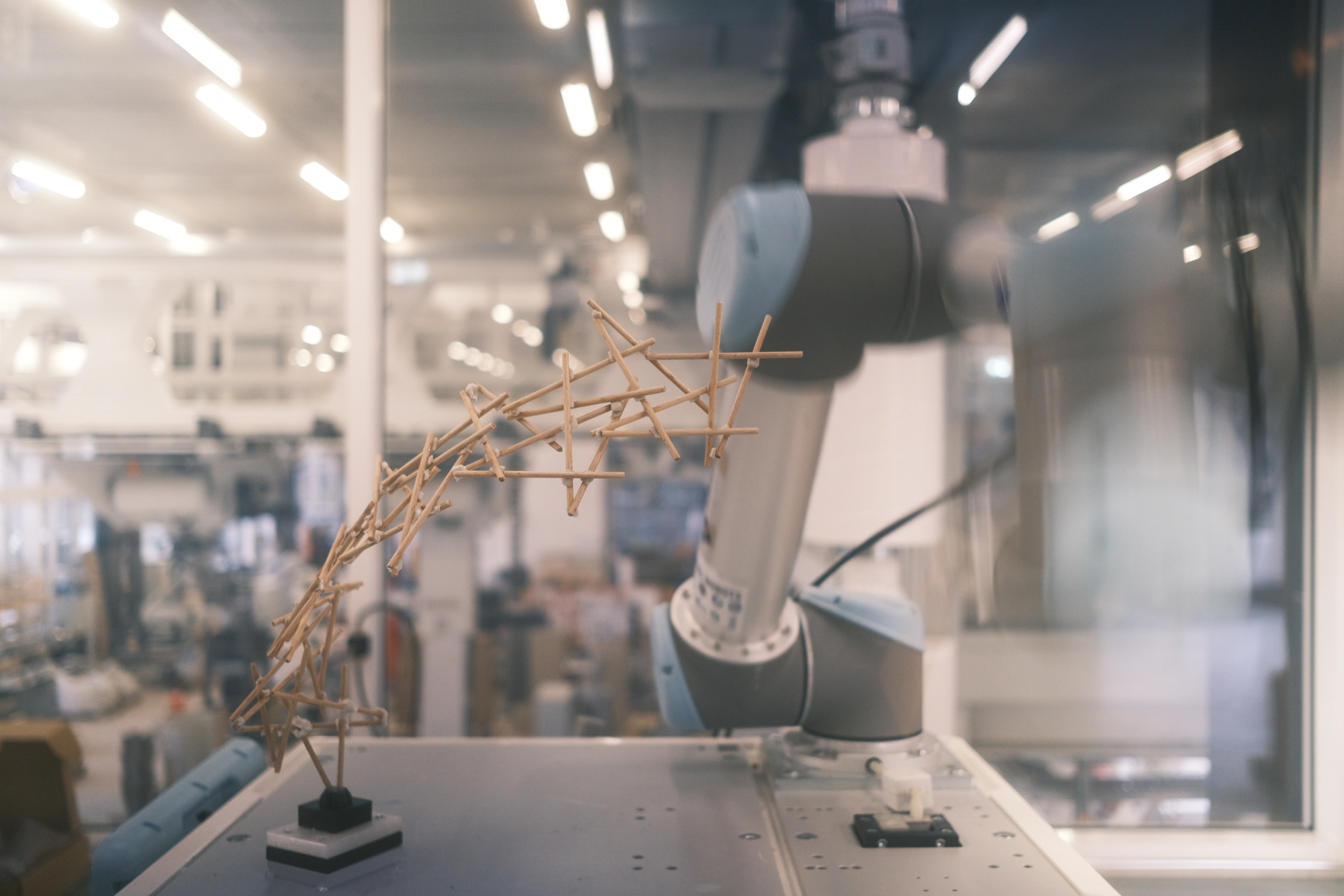
The assembled prototype beside the robotic arm, documented in the original Group6 record.
Group6 project: Chia-Hsuan Chao / Kevin Seav / Megi Sinani.Open full image (new tab)V-Shape Modular Based Aggregation
I worked with Kevin Seav and Megi Sinani to explore reciprocal V-shaped stick modules and robotic assembly planning.
Follow the study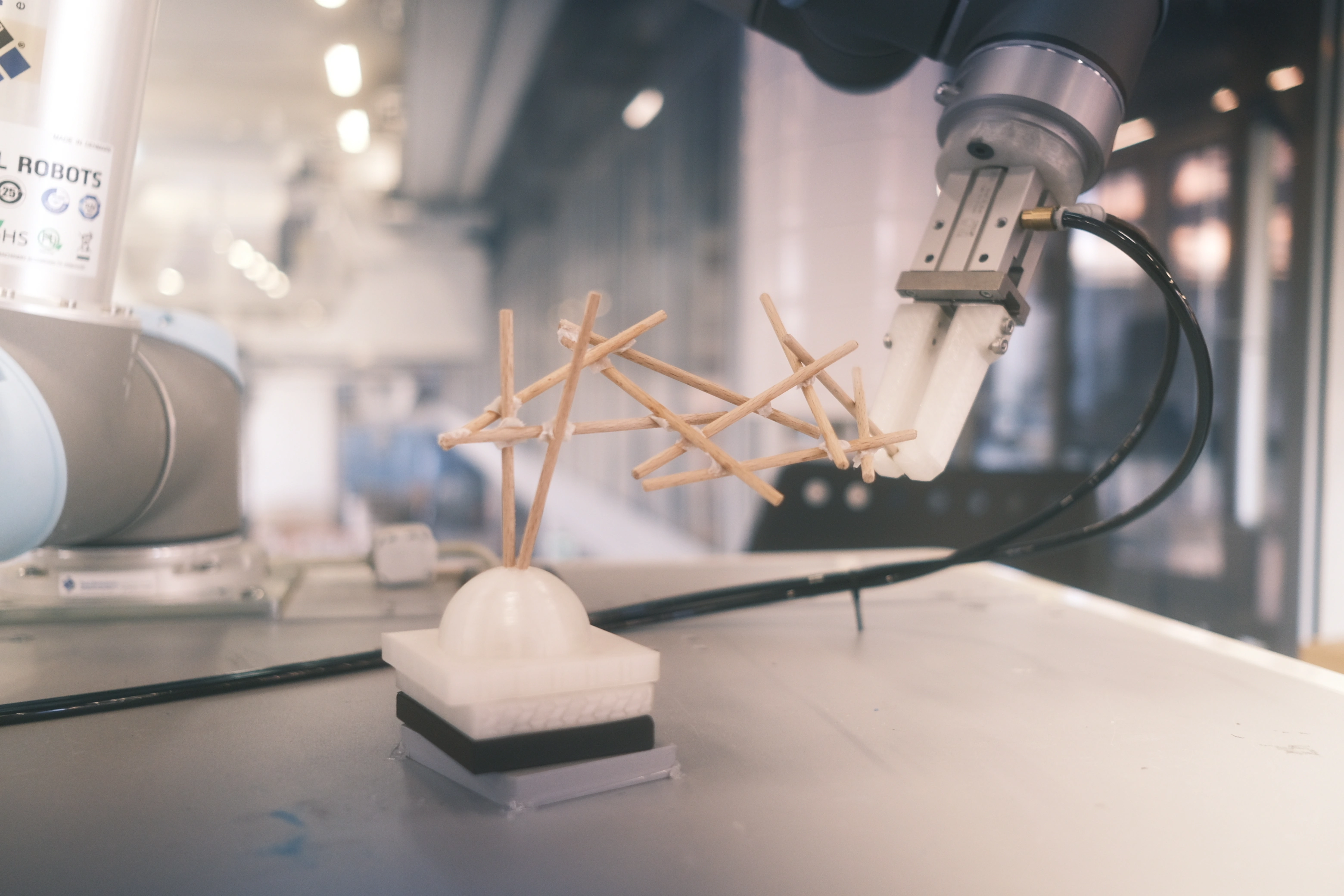
Original source view.
Original reciprocal stick-assembly data study.
Scroll to follow the camera. With focus, use arrow keys to inspect; Home or Esc returns to the current scroll view.
A physical study of the reciprocal stick aggregation and its foundation.
Group6 project: Chia-Hsuan Chao / Kevin Seav / Megi Sinani.
A reciprocal starting point.
I explored V-shaped wooden-stick modules with Kevin Seav and Megi Sinani, drawing on reciprocal structures. Each addition changes the relationships between neighbouring sticks.
Physical prototypes connected this bottom-up geometric study with the conditions of robotic assembly.
Original source view.
Original reciprocal stick-assembly data study.
Scroll to follow the camera. With focus, use arrow keys to inspect; Home or Esc returns to the current scroll view.
The assembled prototype beside the robotic arm, documented in the original Group6 record.
Group6 project: Chia-Hsuan Chao / Kevin Seav / Megi Sinani.
Define a module, then its next neighbour.
I worked on the geometric aggregation study with Group6. The VStickModule diagram separates creating a V-shaped module from generating the next module using previous sticks. NE, NW, SE and SW choices organise directional growth.
The planning diagram then connects that geometry to robot trajectories: generate the assembly, plan through ROS/MoveIt, export JSON and inspect the simulation. Its failure-index branch supports replanning an identified trajectory rather than treating the first plan as final.
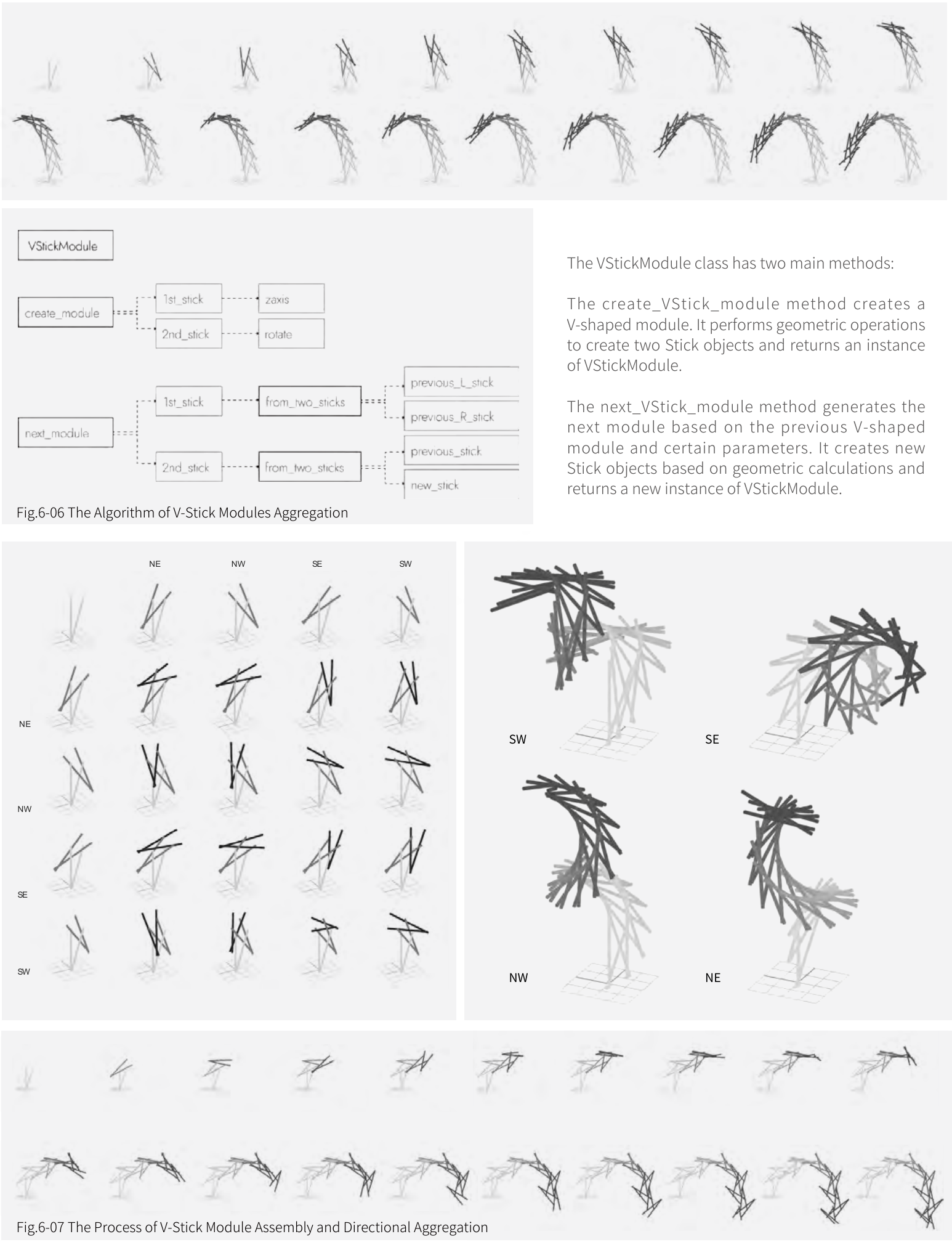
The original VStickModule and directional-aggregation diagrams, with their figure captions.
Group6 project: Chia-Hsuan Chao / Kevin Seav / Megi Sinani. Project diagram.Open full image (new tab)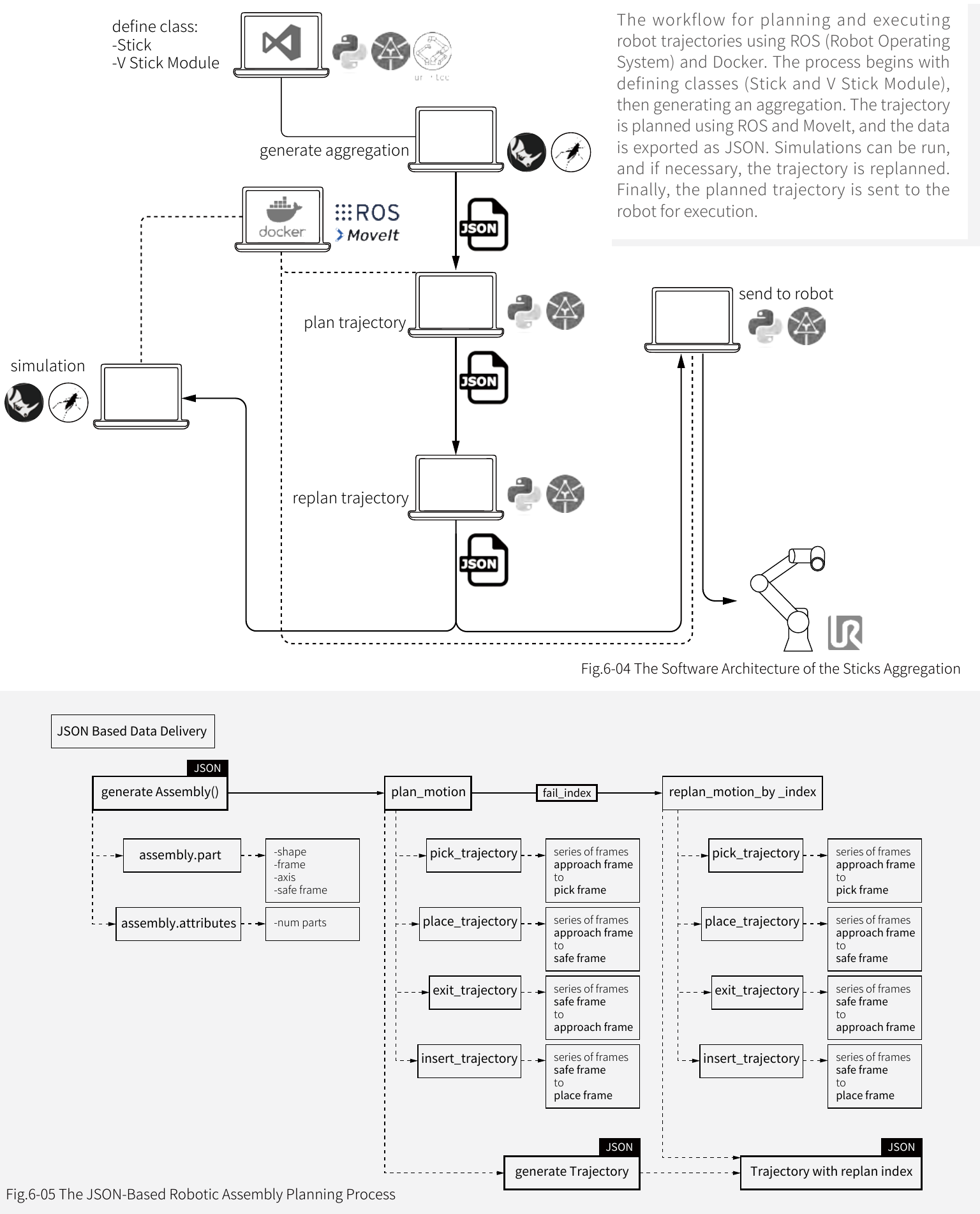
The original software and JSON-based robotic planning workflow.
Group6 project: Chia-Hsuan Chao / Kevin Seav / Megi Sinani. Project diagram.Open full image (new tab)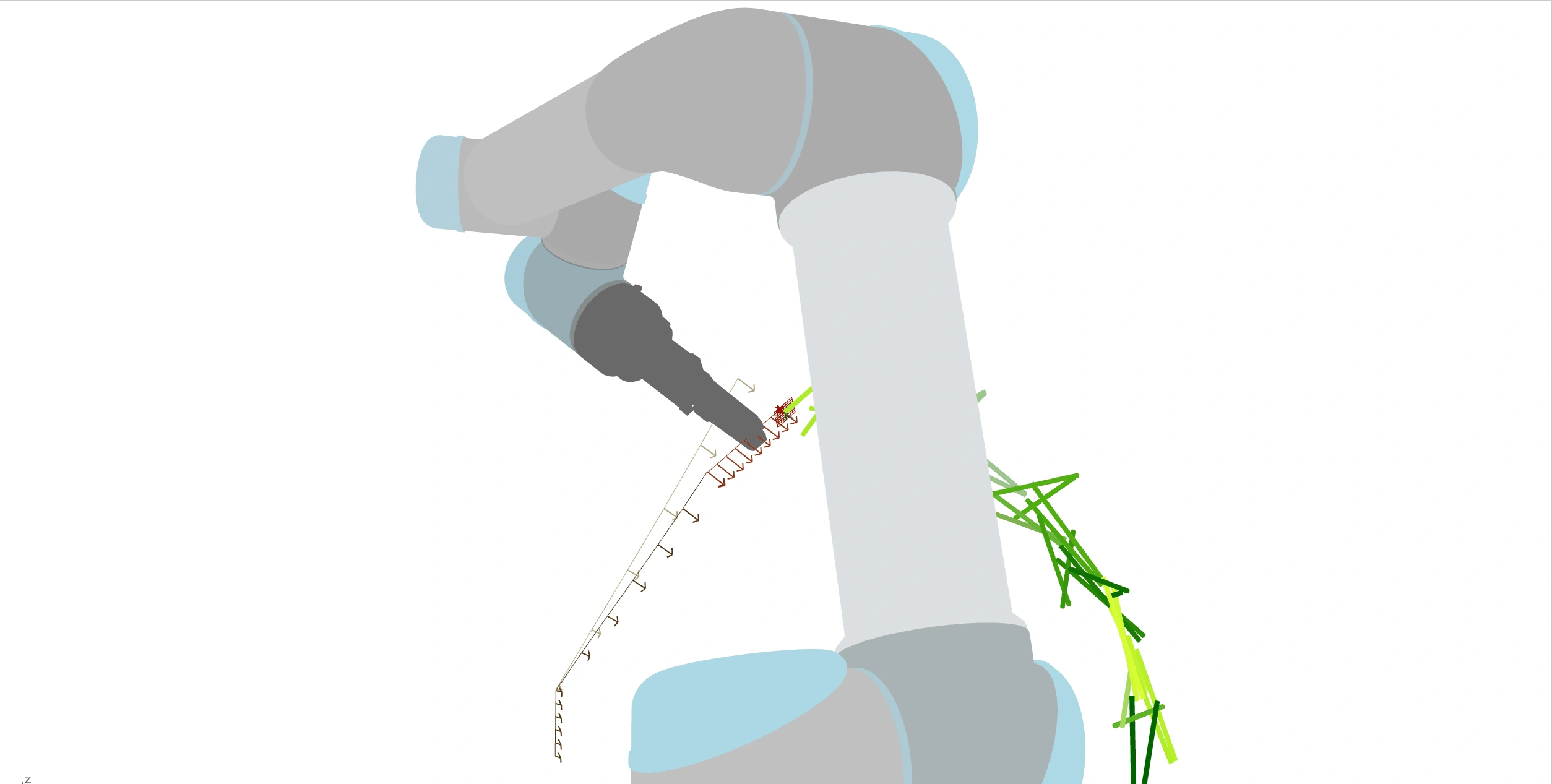
Robot-assembly simulation of the Group6 reciprocal stick study.
Group6 project: Chia-Hsuan Chao / Kevin Seav / Megi Sinani.
Inspect the planned robot movements.
The trajectory plate distinguishes pick, place, exit and insert movements around the growing structure. We studied stick ordering and tool-frame direction, including a Z-axis correction intended to reduce gripper interference with the table.
The moving source is a robot-assembly simulation, not footage of a completed physical assembly. Read it alongside the trajectory diagram; the original assembly model and the physical photographs provide separate views of the study.
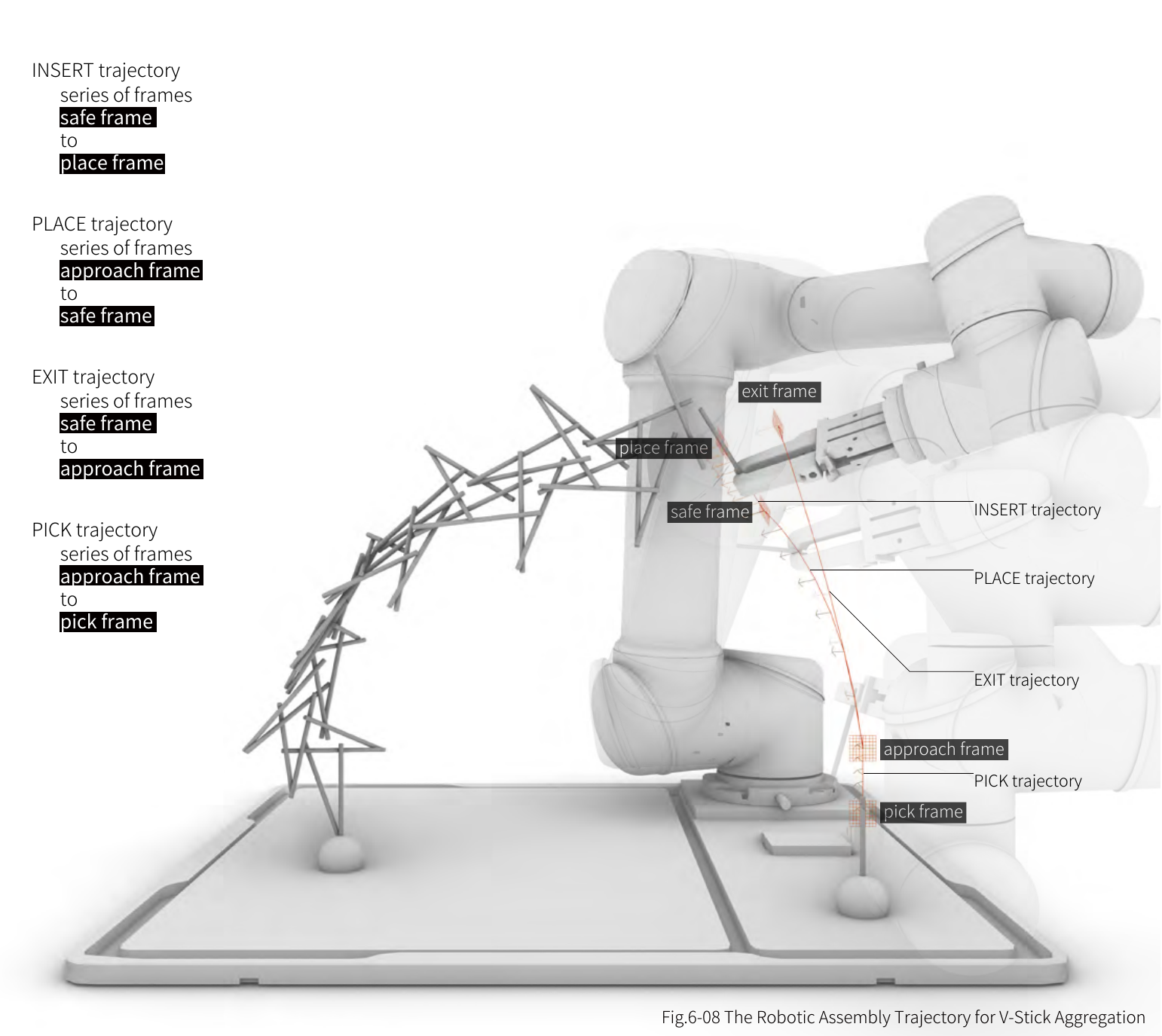
The recorded pick, place, exit and insert trajectory stages for V-stick aggregation.
Group6 project: Chia-Hsuan Chao / Kevin Seav / Megi Sinani. Project diagram.Open full image (new tab)From modules to a prototype.
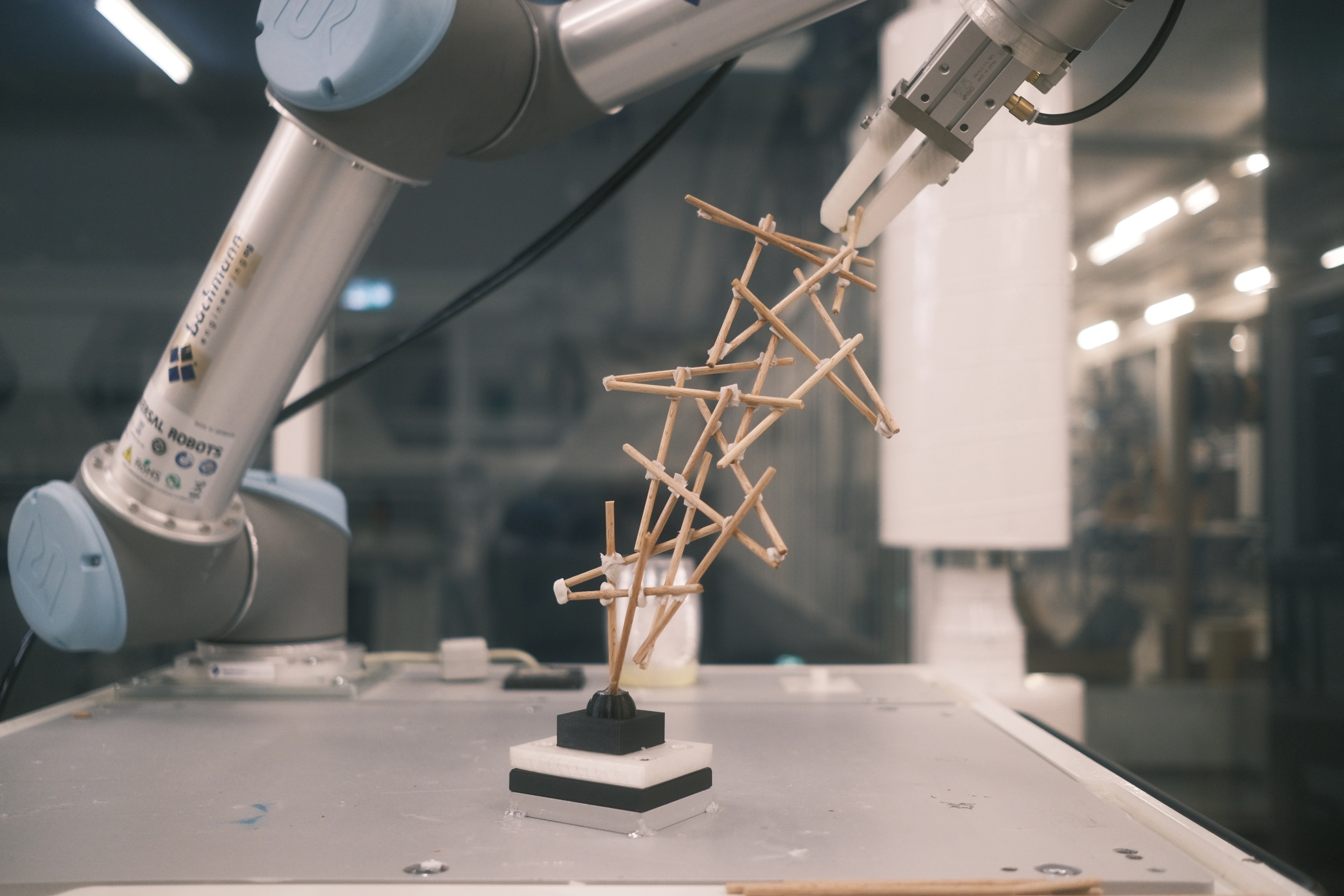 Image unavailable. The source caption, original image link and project text remain available.
The physical prototype from a second viewpoint.
Group6 project: Chia-Hsuan Chao / Kevin Seav / Megi Sinani.Open full image (new tab)The front and top photographs show the physical prototype and the repeated contacts between its sticks. They bring the geometric relationships back to the material assembly.
These prototypes document the team’s physical exploration alongside the planning work. The photographs and simulation do not by themselves establish collision-free execution or a verified assembly sequence for every model part.
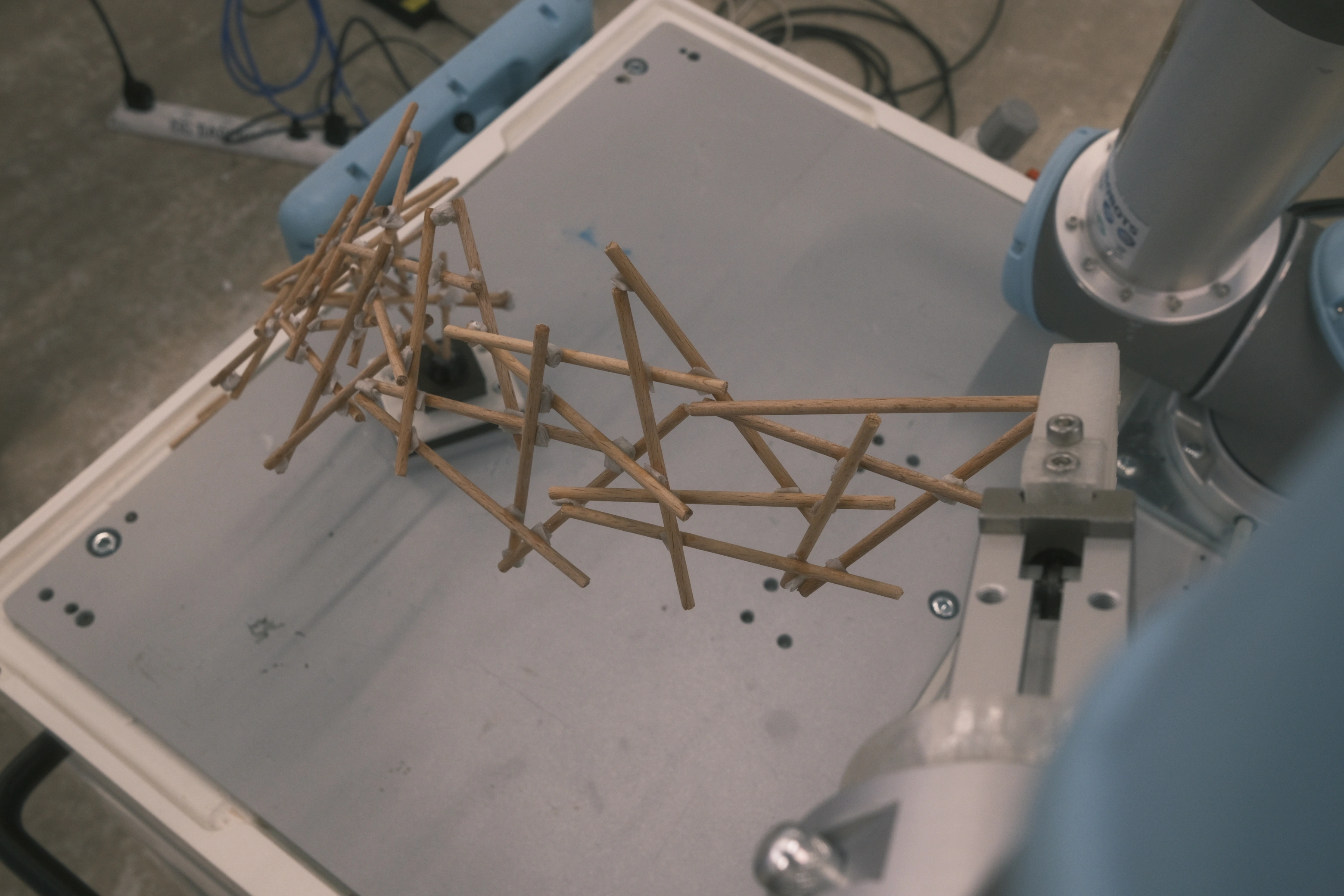 Image unavailable. The source caption, original image link and project text remain available.
A top view of the stick relationships in the assembled prototype.
Group6 project: Chia-Hsuan Chao / Kevin Seav / Megi Sinani.Open full image (new tab)